In the evolving residential fabric of Chennai, where new high-rise developments increasingly shape urban living, this 4BHK apartment at Appaswamy Builders in Velachery proposes a distinctly atmospheric idea of home. Titled A Glass of Wine, the project resists the visual urgency that often defines contemporary interiors, instead embracing a slower, more deliberate spatial experience.
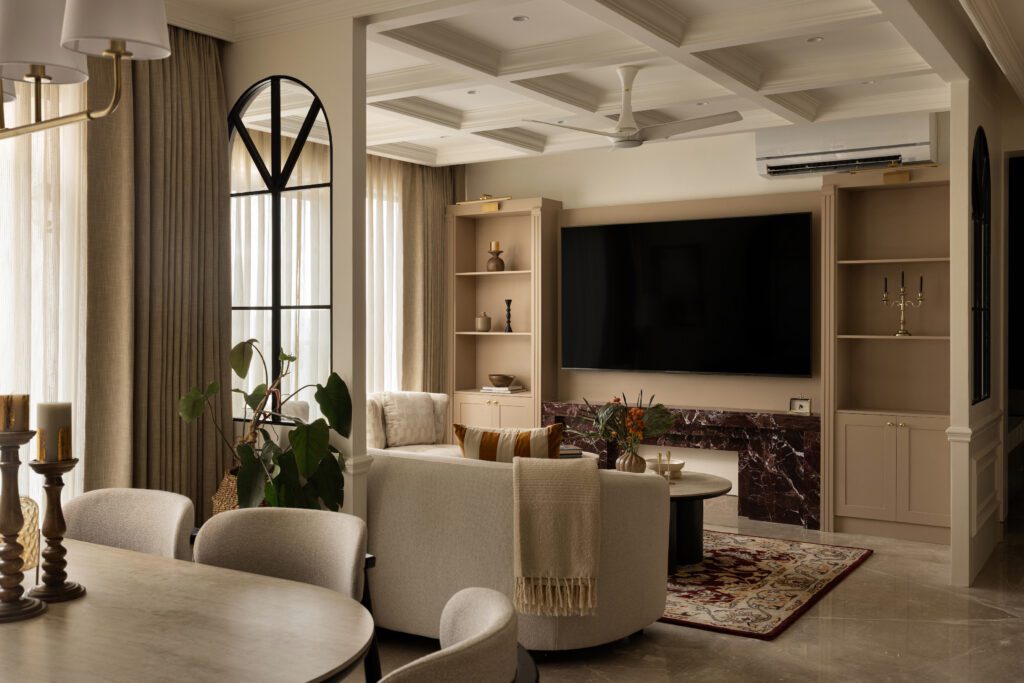
Conceived by Studio Hooguh, led by principal designers Rachel and Nikita, the residence is anchored in warmth, tonal depth, and a quiet confidence that privileges lived comfort over spectacle. The design language unfolds as a careful choreography of colour, materiality, and proportion, crafting spaces that reveal themselves gradually rather than all at once.
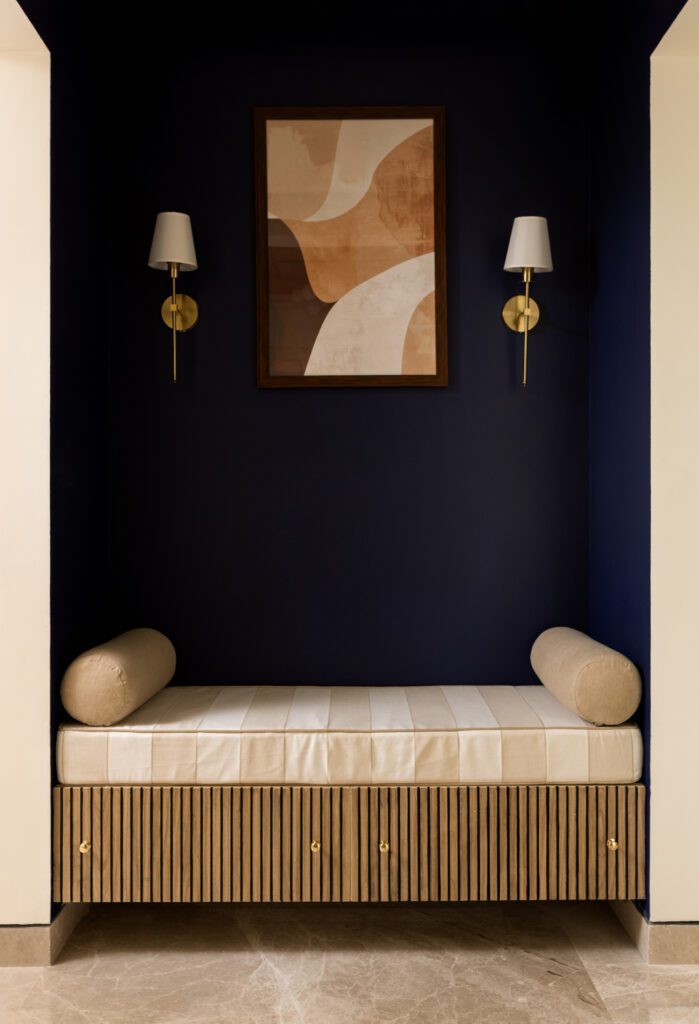
The apartment’s narrative begins at the foyer, envisioned not as a functional afterthought but as an intentional threshold, a moment of transition that establishes the home’s emotional cadence. Colour-drenched in a deep navy blue, the entry volume immediately departs from predictable neutrality. A custom wooden drop ceiling, layered with warm lighting and veneer detailing, introduces a sense of intimacy and enclosure, while a sculptural designer wall sconce operates as both illumination and object. This space does more than receive; it prepares. The tonal saturation, the controlled glow, and the tactile warmth collectively frame the experience of arrival, suggesting that the home is to be entered with a shift in pace and perception.
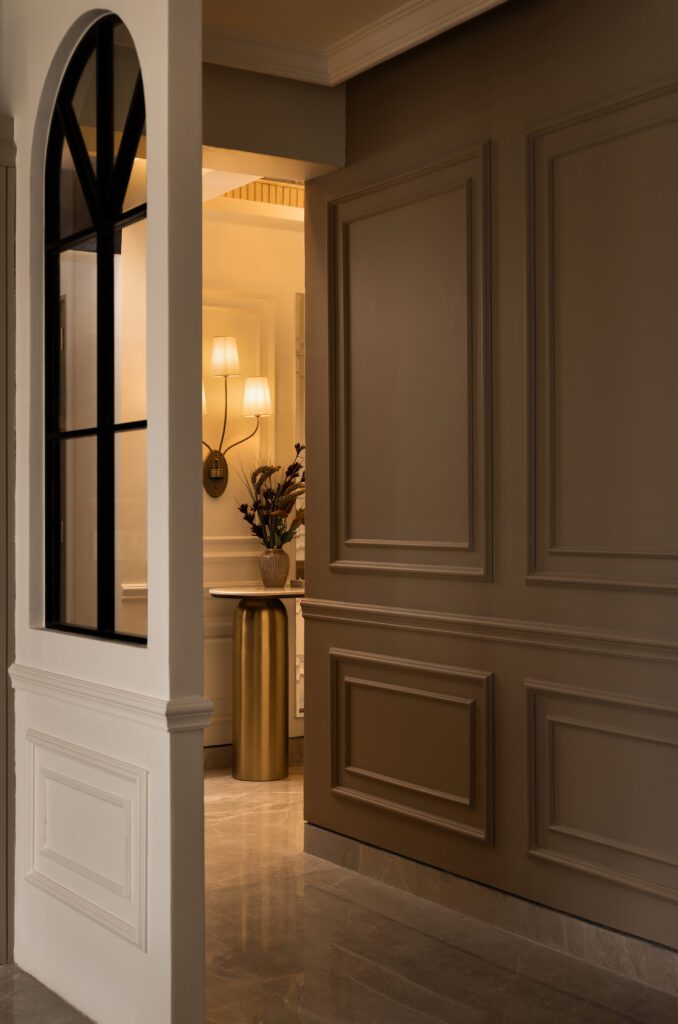
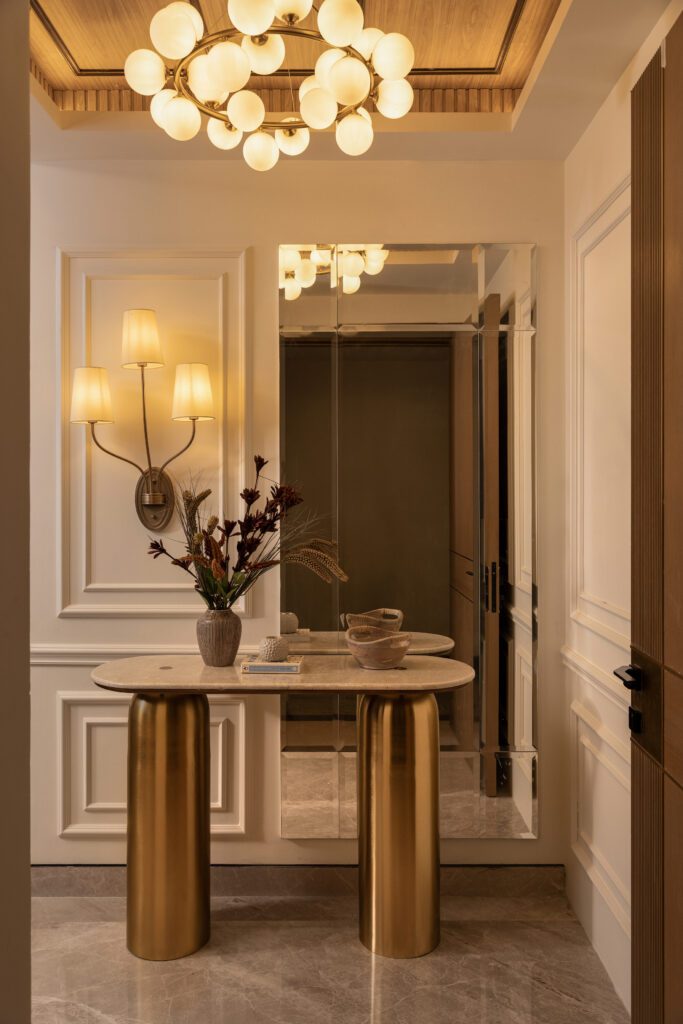
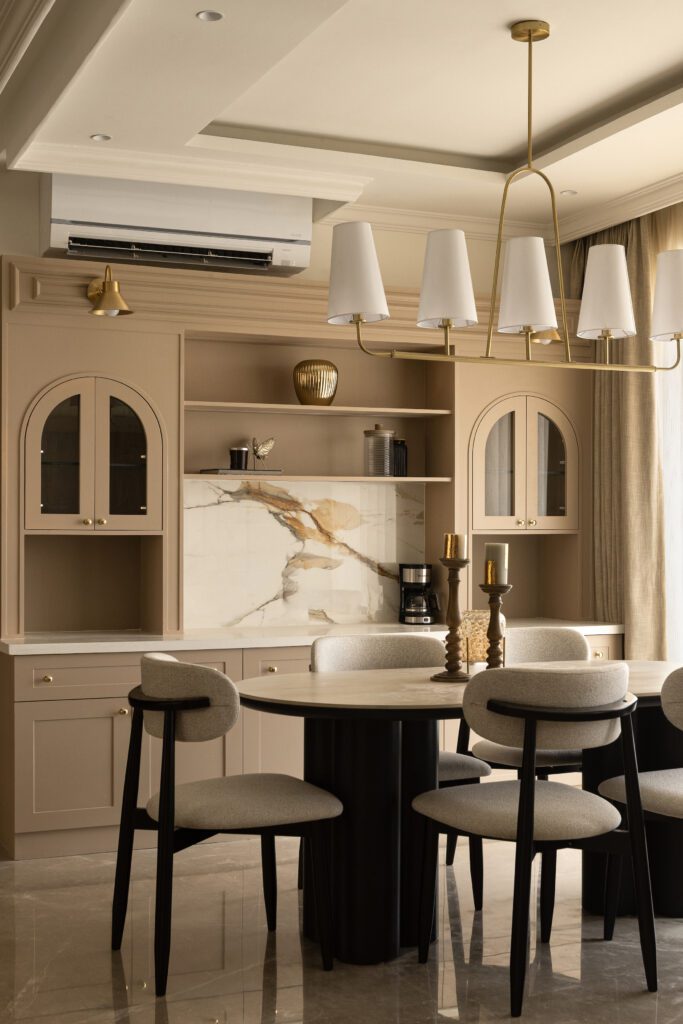
Moving beyond the foyer, faux arched aluminium-and-glass half windows introduce a playful yet disciplined architectural gesture. Rather than fully dissolving boundaries, these arched openings cultivate a nuanced visual dialogue between the foyer and dining zone. The intervention is subtle but spatially transformative. The arches soften what might otherwise be rigid transitions, establishing rhythm without compromising definition. Their presence generates curiosity, offering partial views and layered sightlines that lend the layout a sense of depth and movement. It is a reminder that architectural articulation need not be monumental to be meaningful; here, proportion and silhouette become tools of atmosphere.
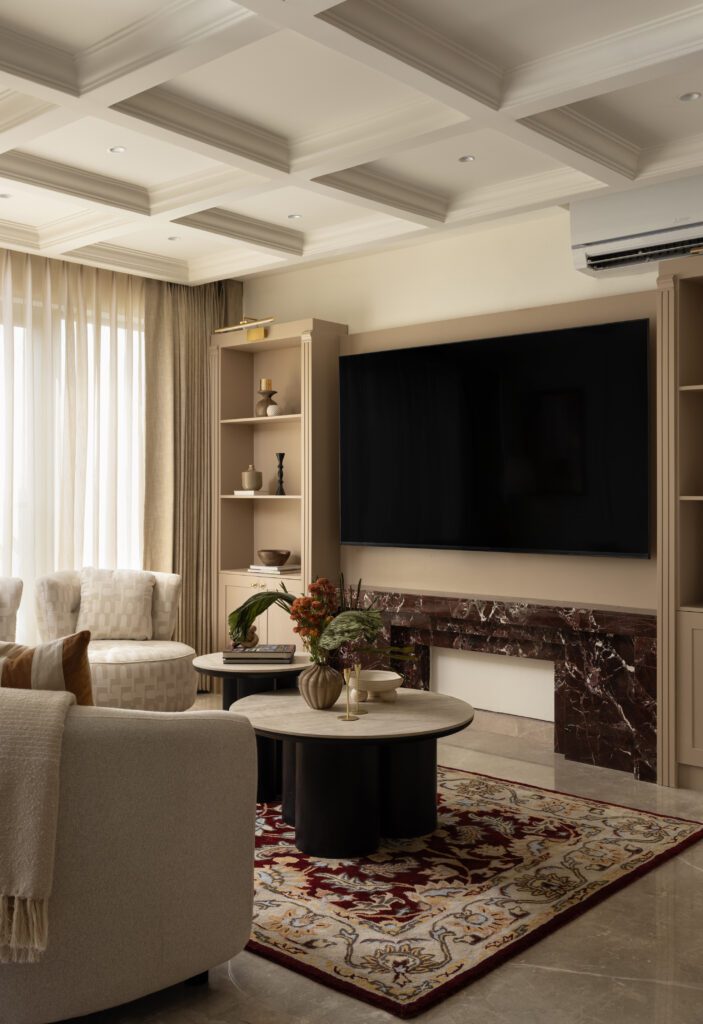
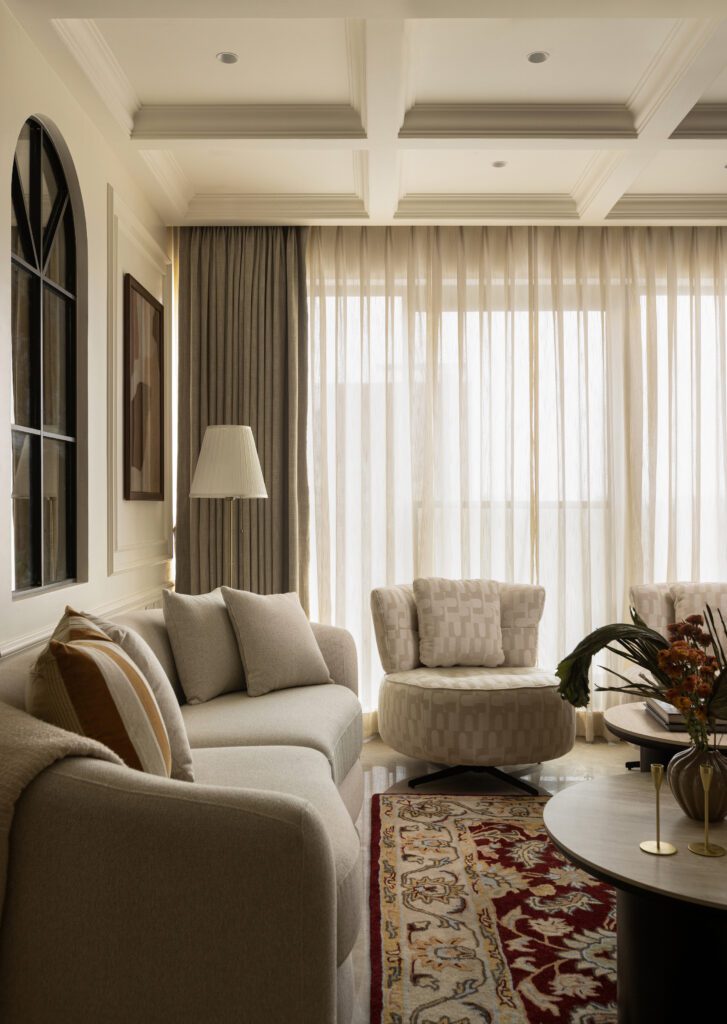
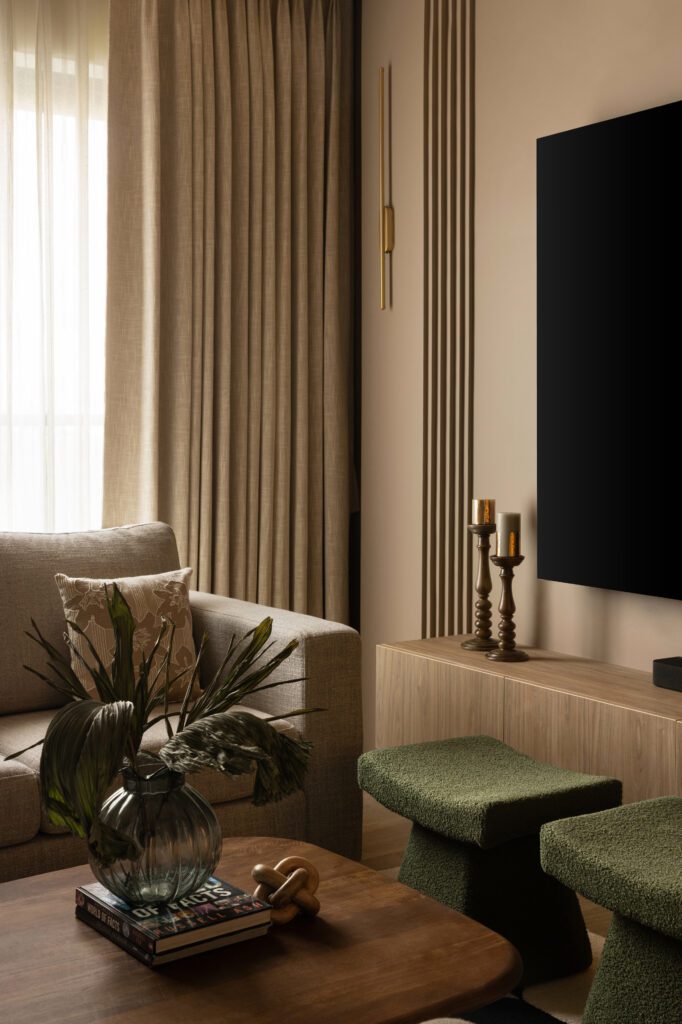
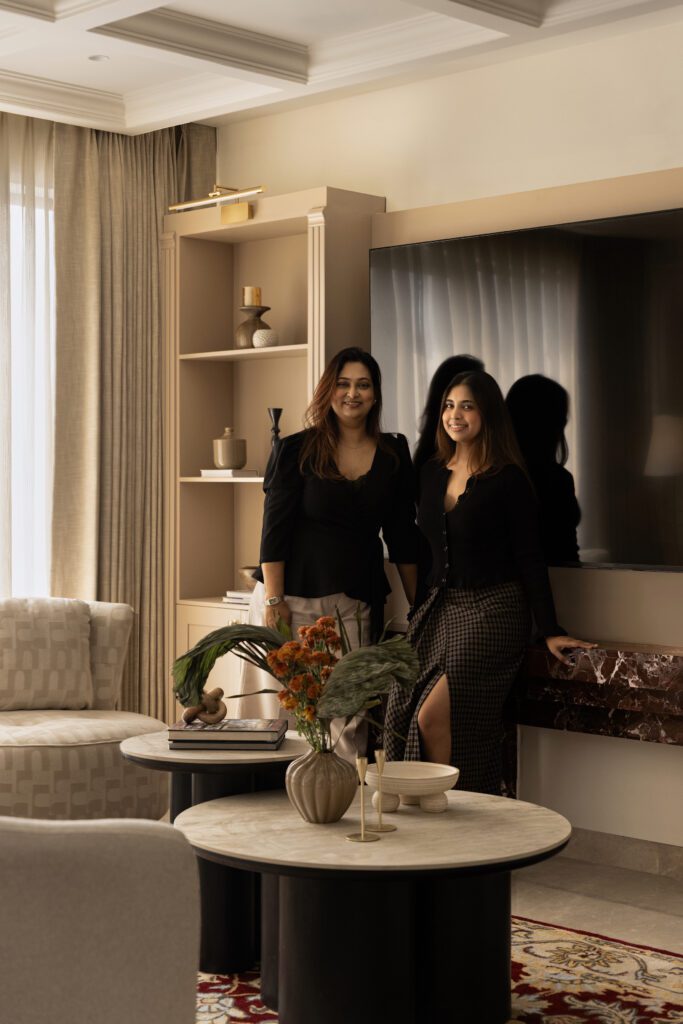
Within the living area, materiality assumes a more dramatic but measured role. A bespoke mantelpiece clad in richly veined burgundy marble anchors the entertainment wall, its tonal intensity introducing depth and character. Extending seamlessly to function as a television console, the stone element negotiates the boundary between ornament and utility with ease. The choice of burgundy marble is particularly resonant. It injects a sense of visual richness while remaining harmonised within the broader palette, avoiding excess through precision. The stone’s natural veining, expressive yet controlled, mirrors the project’s overarching ethos, expressive gestures grounded in restraint.
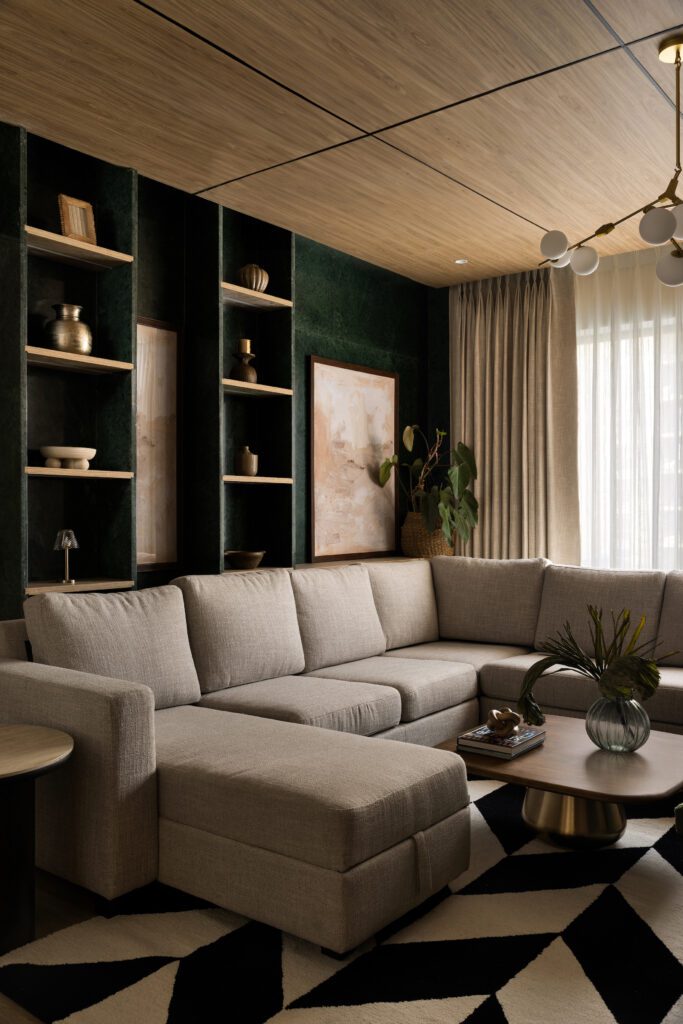
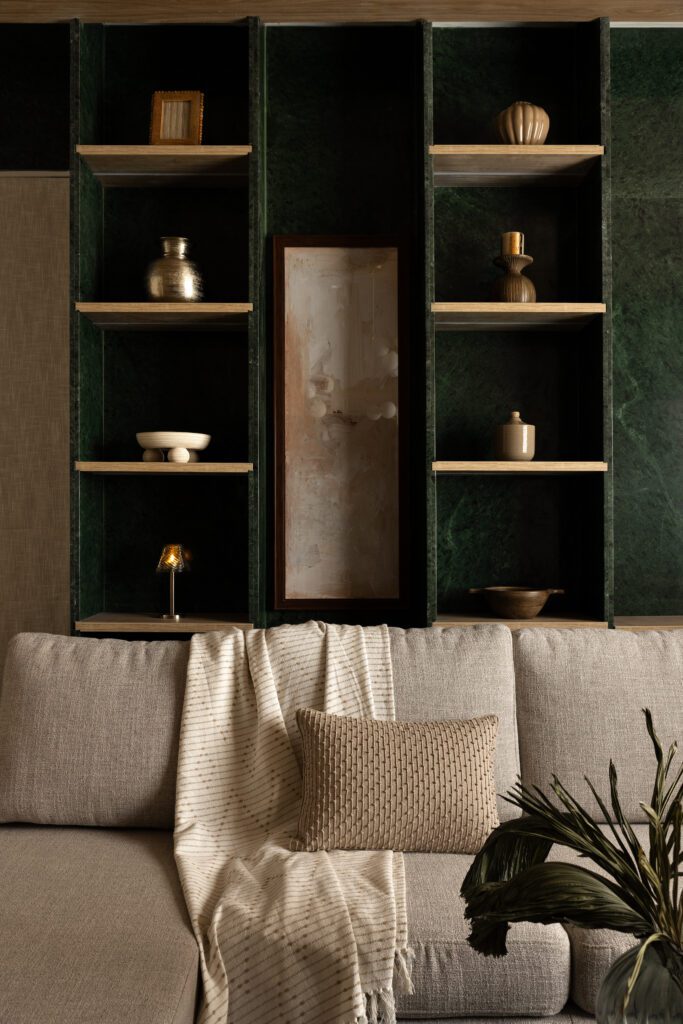
In contrast, the theatre room explores a quieter, more cocooned interpretation of luxury. Defined by green marble and subdued lighting, the space is conceived as an intimate retreat rather than a performative media lounge. Carefully crafted niches house curated curios, allowing memory and personal narrative to become part of the architectural composition. The room’s success lies not in technological bravado but in mood. Surfaces, shadows, and objects converge to produce an environment that feels layered, personal, and gently immersive. It is an interior calibrated for pause, a setting that privileges stillness and reflection.
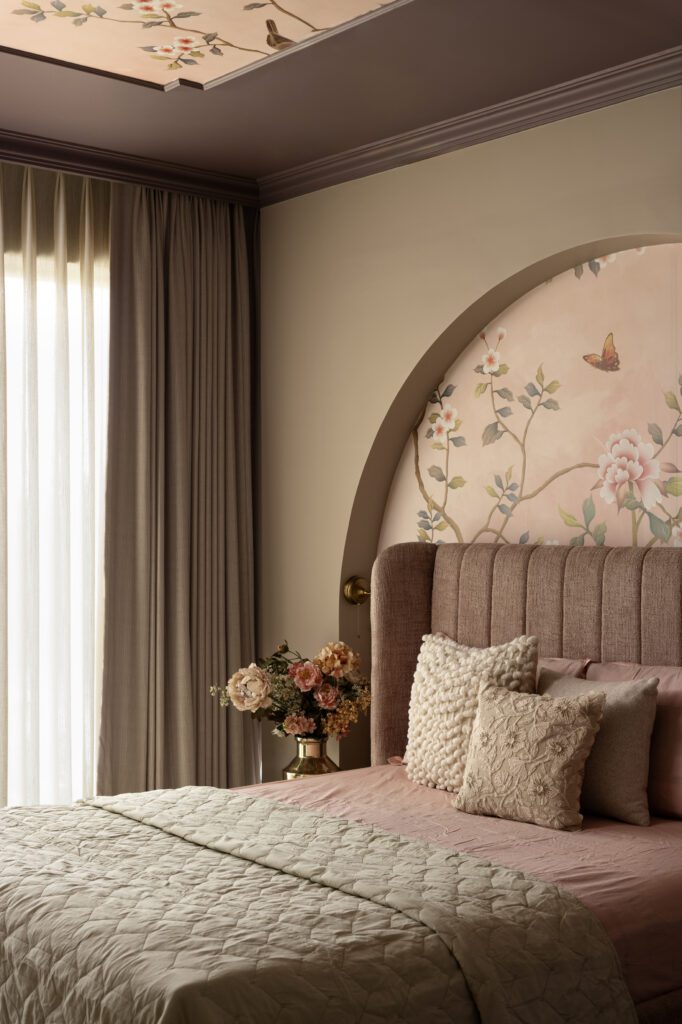
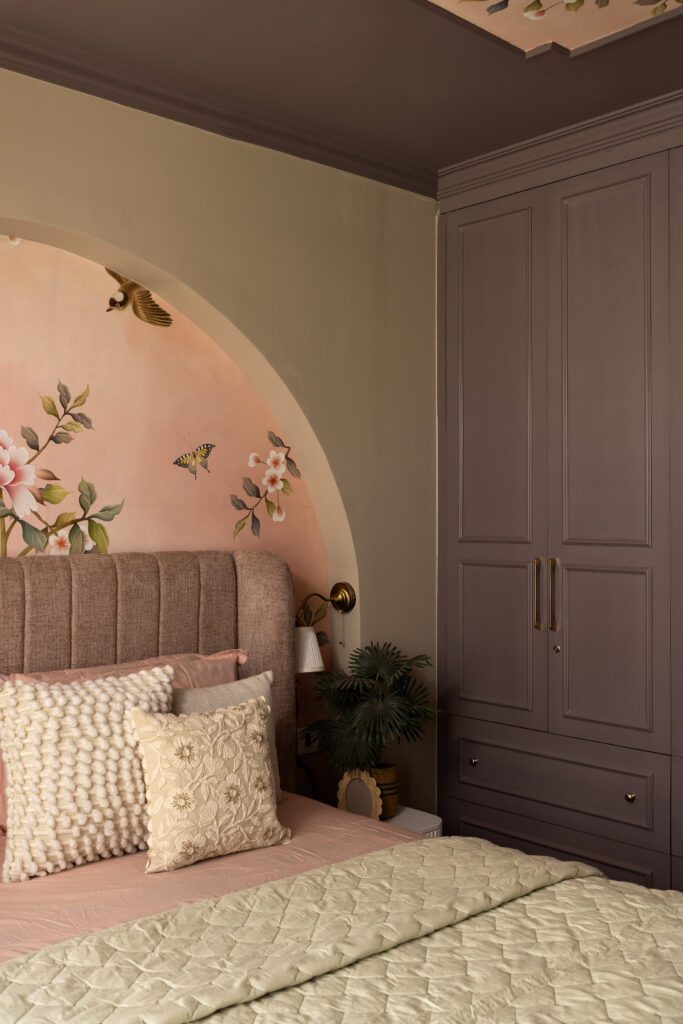
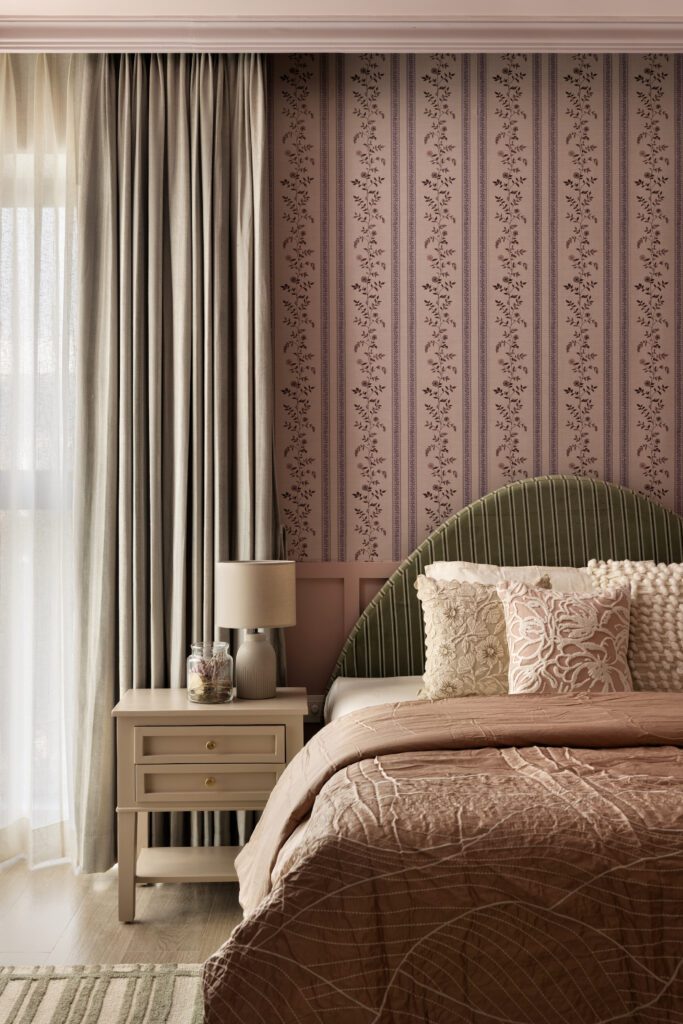
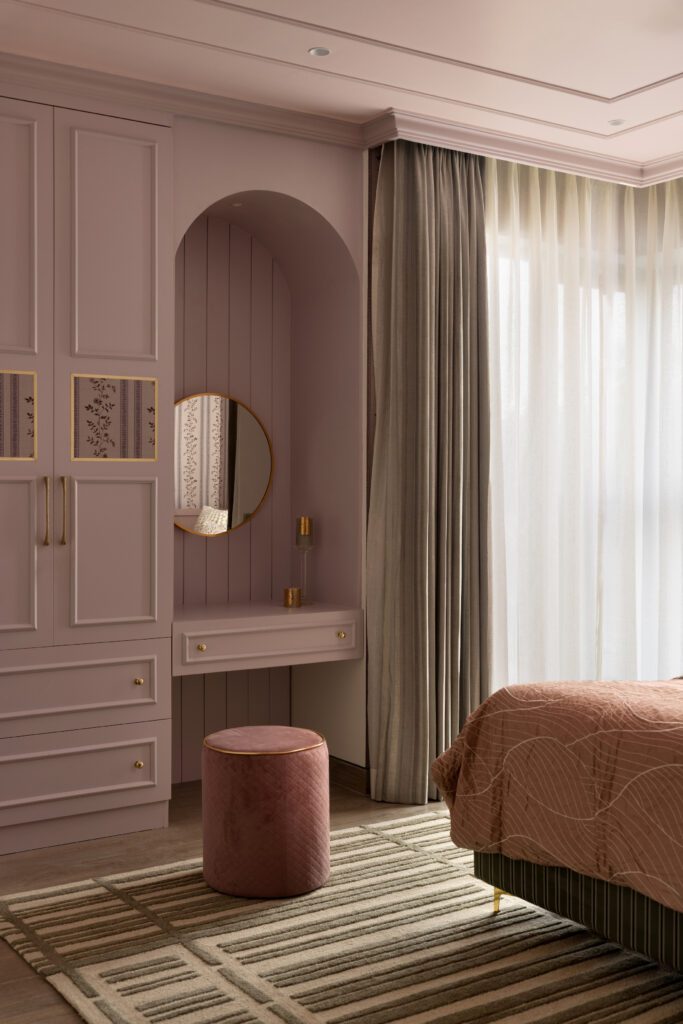
The residence’s private quarters further articulate Studio Hooguh’s commitment to individuality within cohesion. Rather than imposing a singular visual language, each bedroom responds to the personality and emotional landscape of its occupant. One daughter’s room, animated by custom designer wallpaper in soft lilac hues, balances expressiveness with delicacy. Another bedroom, structured around an arched niche bed nook, leverages enclosure as a spatial and psychological device, crafting a setting that feels both protective and serene. These rooms demonstrate an important sensitivity: that domestic environments derive meaning from personal resonance as much as formal consistency.
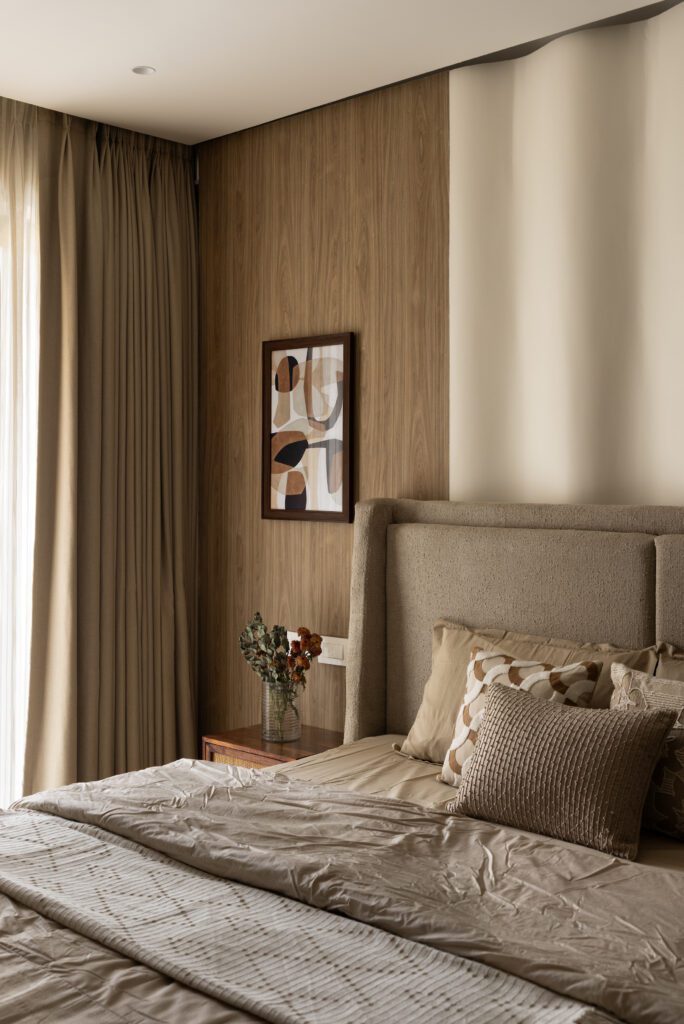
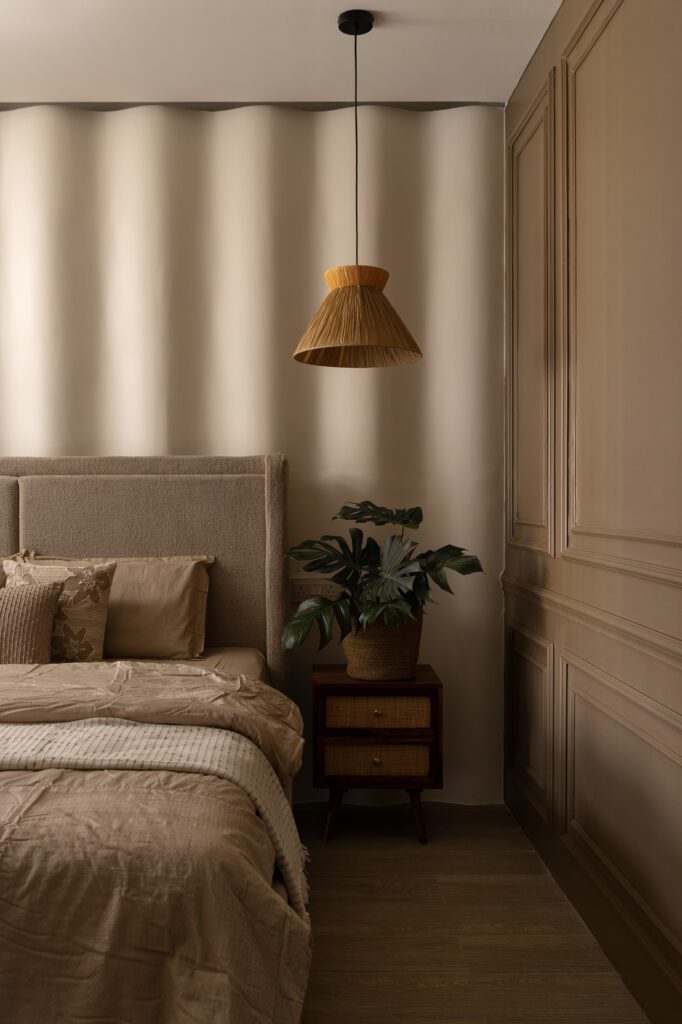
The primary suite, meanwhile, distils the project’s philosophy into its most composed expression. Conceived as a sanctuary, the space is defined by a restrained palette and softened geometries. A custom curved panel with a subtle ripple effect introduces a gentle sense of movement, allowing texture rather than colour to articulate visual interest. The walk-in wardrobe extends this logic of fluidity and function, enhancing circulation while preserving calm. The suite avoids overt statements, relying instead on proportion, tactility, and light to cultivate a sense of retreat. It is an environment designed for decompression, where visual quietude becomes a form of luxury.
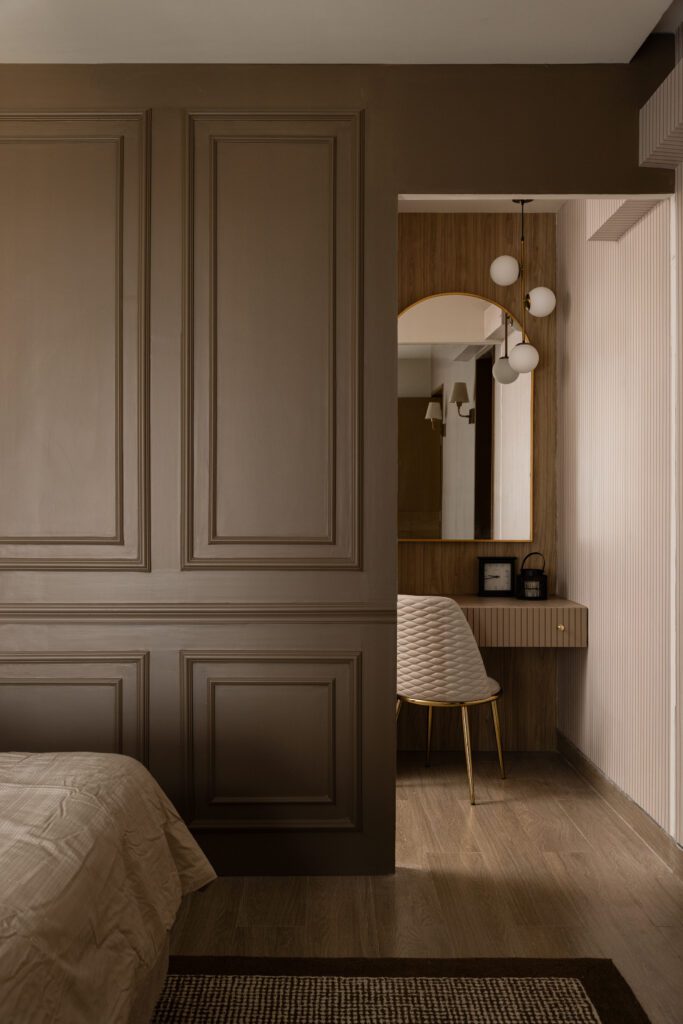
What ultimately distinguishes A Glass of Wine is its disciplined embrace of balance. Between boldness and subtlety, drama and calm, architectural clarity and emotional warmth, the residence negotiates contrasts without tension. The apartment’s position on the fourth floor of a new high-rise building becomes almost incidental; the interior experience transcends its typological context. Like its evocative title, the home invites lingering rather than passing, attention rather than distraction. It is a space designed not merely to be inhabited, but to be savoured – slowly, deliberately, and with a sustained appreciation for nuance.
About the Designers – Studio Hooguh
Studio Hooguh approaches interior design through the lens of atmosphere, emotion, and spatial sensitivity, favouring environments that feel timeless rather than trend-led. Helmed by principal designers Rachel and Nikita, the studio is recognised for crafting interiors that balance visual richness with restraint, where materiality, proportion, and tonal depth play a central role. Their work often explores how colour and form can subtly shape perception, producing spaces that feel both refined and deeply liveable.
Rachel and Nikita’s design philosophy centres on creating homes that unfold gradually, privileging experience over immediate impact. Rather than relying on overt gestures, their projects are defined by layered details, softened geometries, and carefully calibrated palettes. The studio’s work reflects a nuanced understanding of contemporary living, where individuality, comfort, and architectural clarity coexist seamlessly, an ethos clearly embodied in A Glass of Wine.
Fact File
Project Name: A Glass of Wine
Location: Velachery, Chennai
Typology: Residential Project – 4BHK Apartment
Area: 2,100 sq. ft.
Design Studio: Studio Hooguh
Principal Designers: Rachel & Nikita
Photography: Phosart Studio