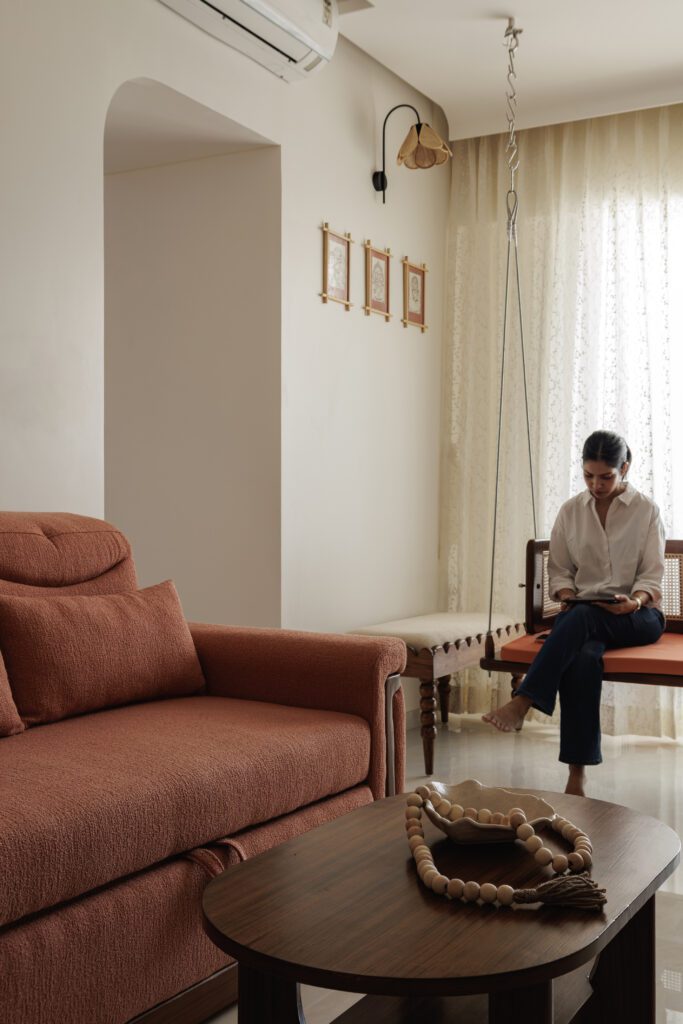
Asakta is a 770 sq. ft. apartment in Kanjurmarg, Mumbai, envisioned as a quiet yet expressive home that bridges contemporary living with deeply rooted Indian traditions. Designed by Insidestory Studio, the project reflects a thoughtful approach to compact urban living, where restraint, warmth, and craftsmanship take precedence over excess. Rather than leaning into overt nostalgia, the design draws from familiar cultural references and reinterprets them through a clean, modern vocabulary, resulting in a home that feels timeless, personal, and effortlessly liveable.
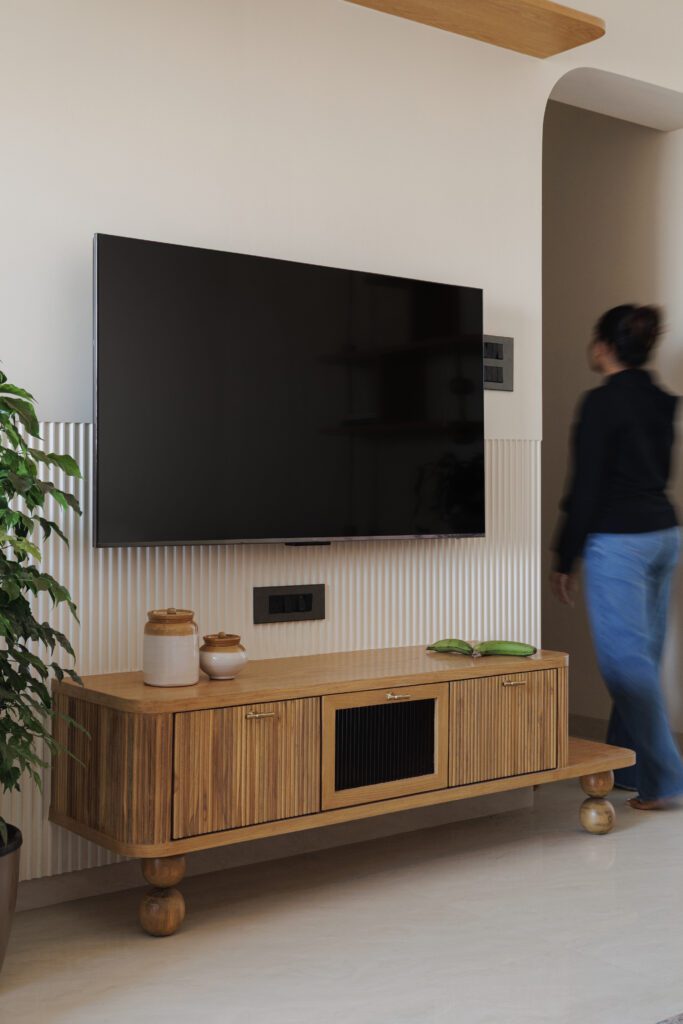
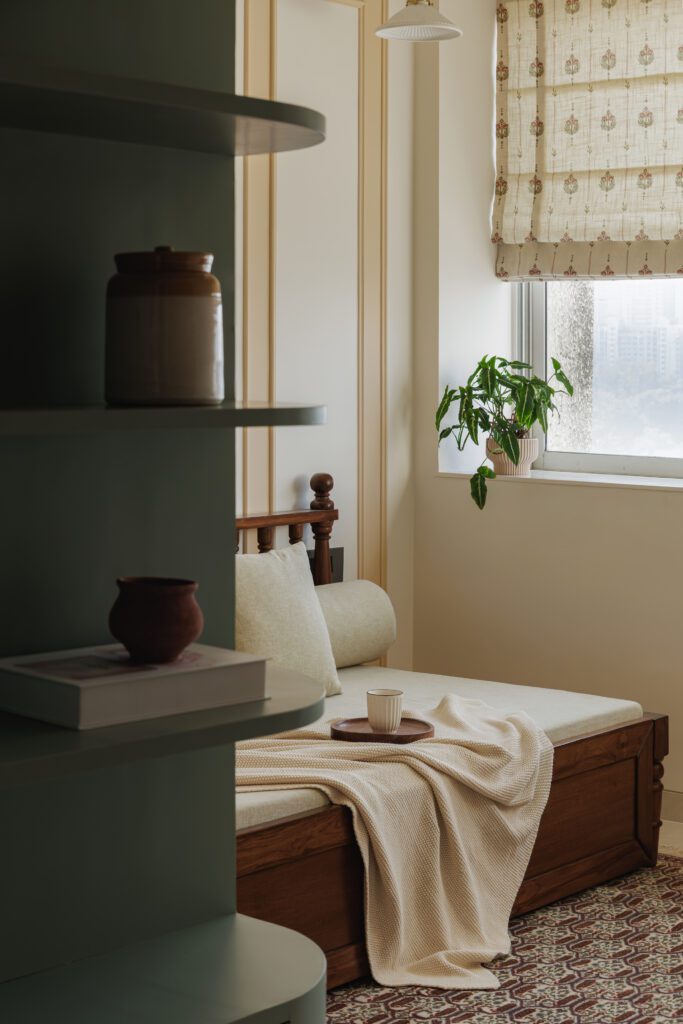
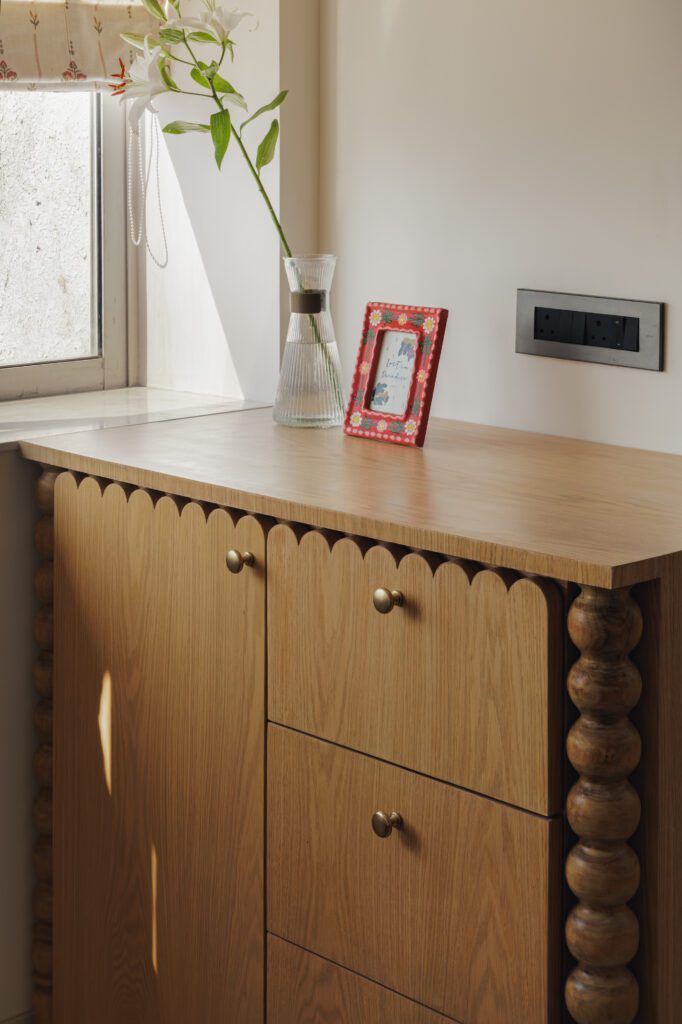
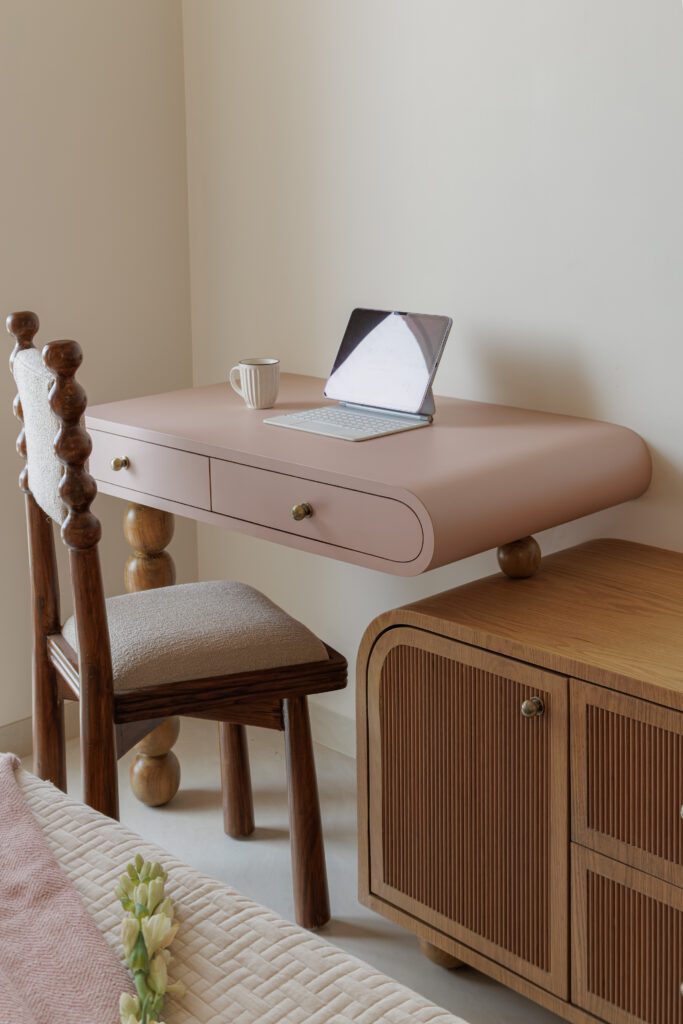
At the heart of the interiors lies a carefully curated material and detail-driven narrative. A recurring bobbin-turned wood motif appears across furniture legs, shelving supports, chair backs, and pendant lights, lending the home a sense of rhythm and handcrafted charm. This repetition creates visual continuity across spaces while subtly celebrating traditional woodworking techniques. Complementing this are fluted wooden panels on TV units and cabinetry, which introduce texture and depth without visually weighing down the compact footprint. Curved edges, light oak finishes, and soft transitions between spaces ensure the apartment feels open and fluid, allowing light to travel freely and enhancing the overall sense of calm.
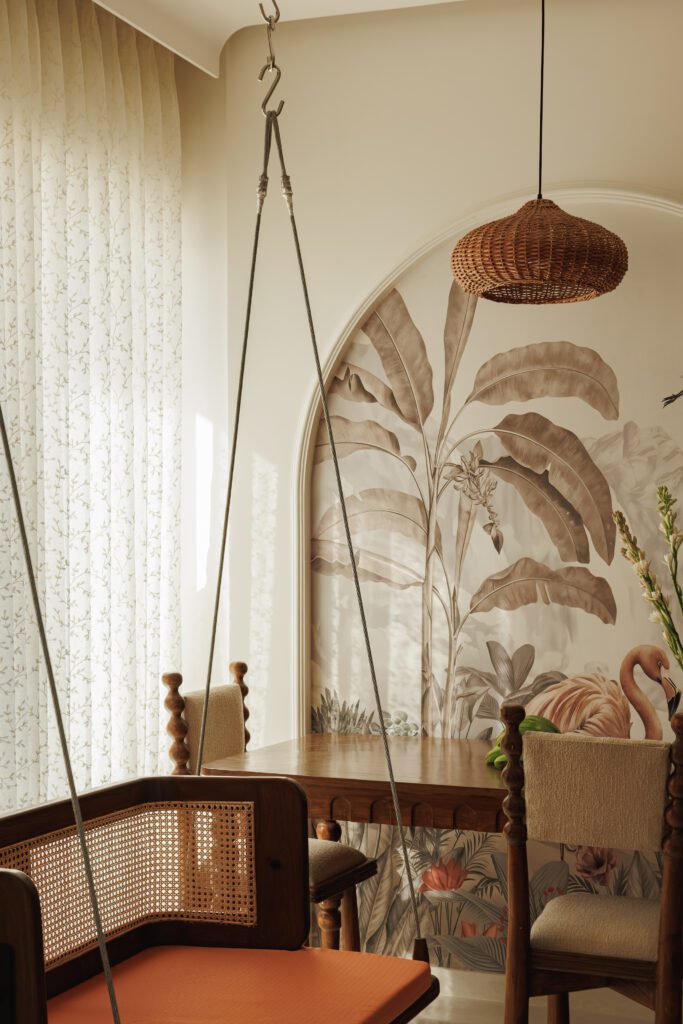
The living area emerges as the most evocative space in the home, anchored by a traditional cane-woven jhoola that instantly evokes memories of Indian homes of the past. Upholstered with a striking orange cushion, the swing becomes both a functional seating element and a cultural anchor. Behind it, a dramatic tropical mural wallpaper featuring banana leaves, cranes, and flamingos adds a layer of storytelling, bringing nature indoors while introducing colour, movement, and whimsy. This bold backdrop is carefully balanced by the otherwise neutral setting, ensuring the space remains elegant rather than theatrical.
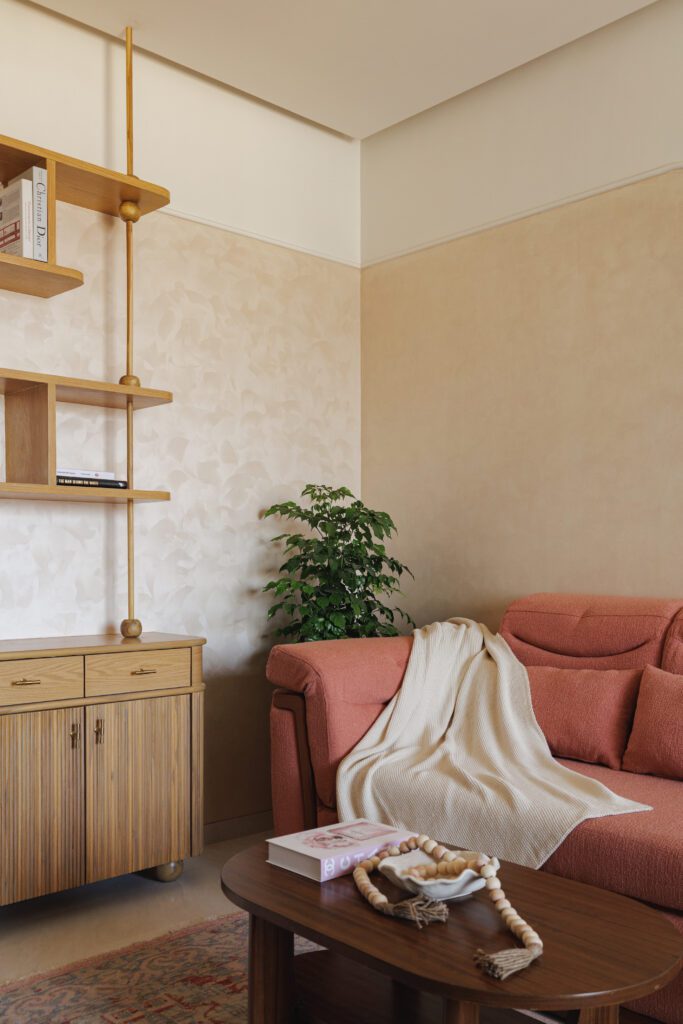
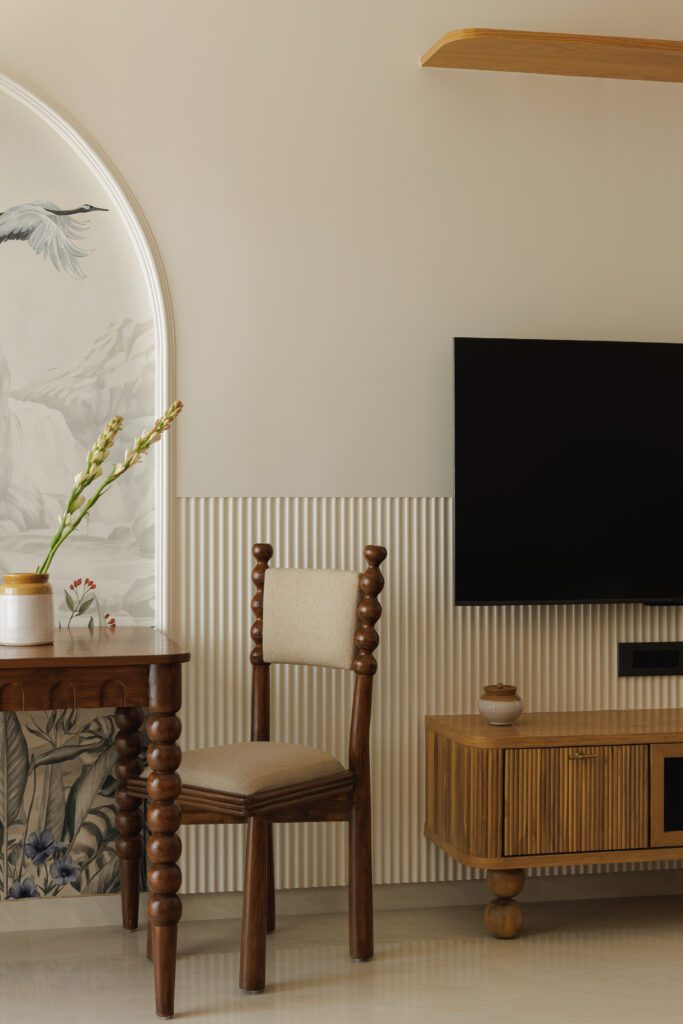
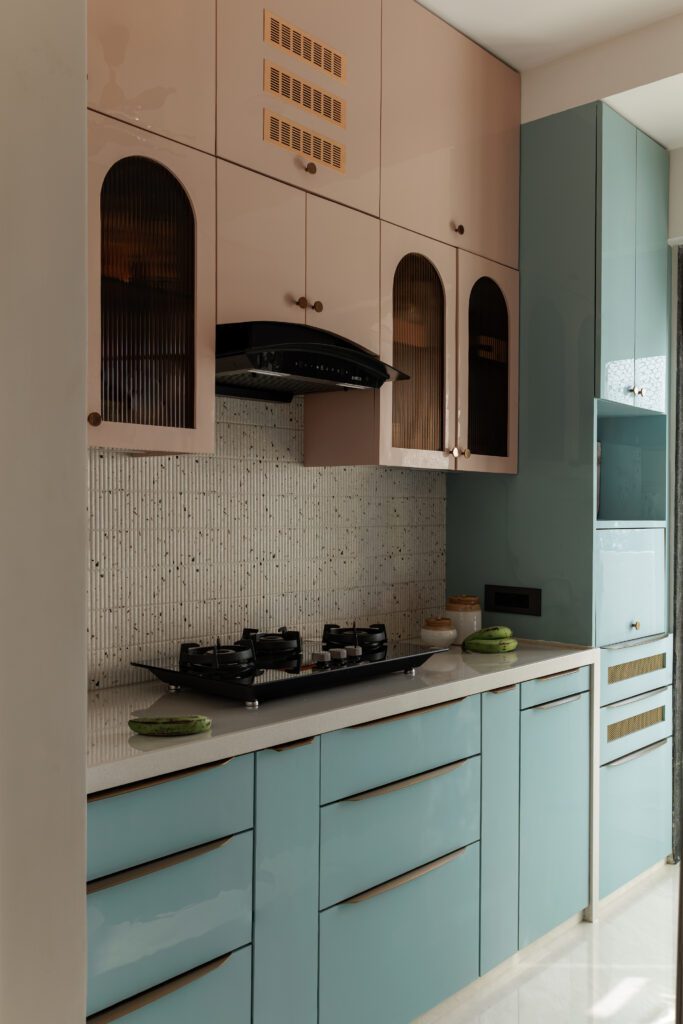
A soft, cohesive colour palette ties the apartment together. Creamy beiges, gentle blush pinks, and warm wood tones form the foundation, allowing handcrafted details and décor to shine. The palette is punctuated by lush indoor plants, ceramic artefacts, and fresh tuberoses, adding sensory richness and a lived-in warmth. Thoughtful interventions such as asymmetrical shelving units and a floating pink desk introduce moments of surprise while maintaining functionality, an essential consideration in a home of this scale.
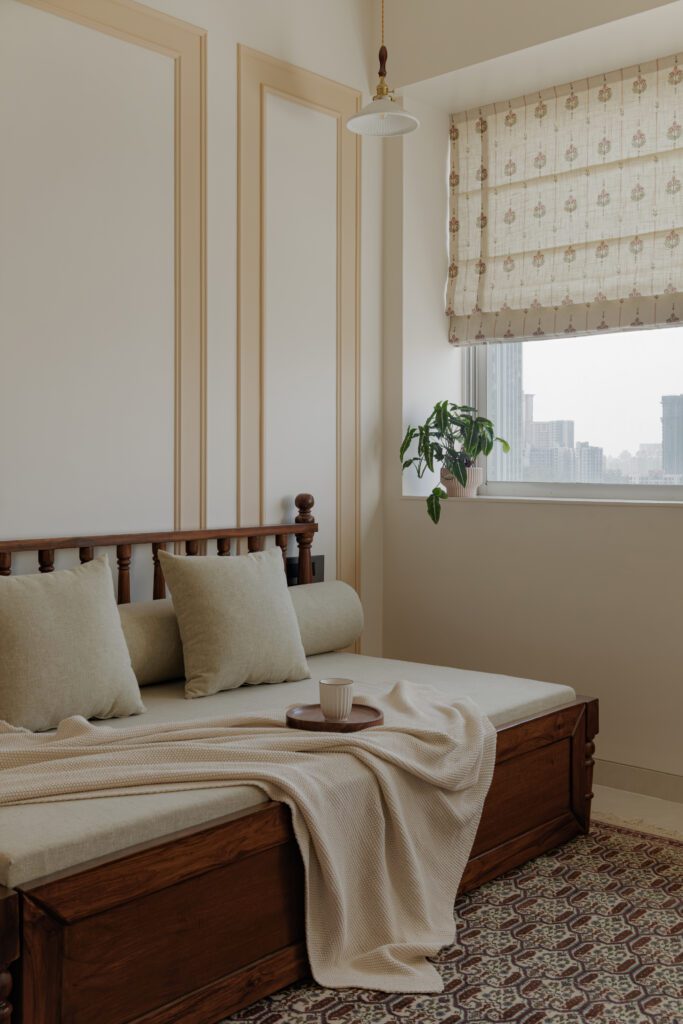
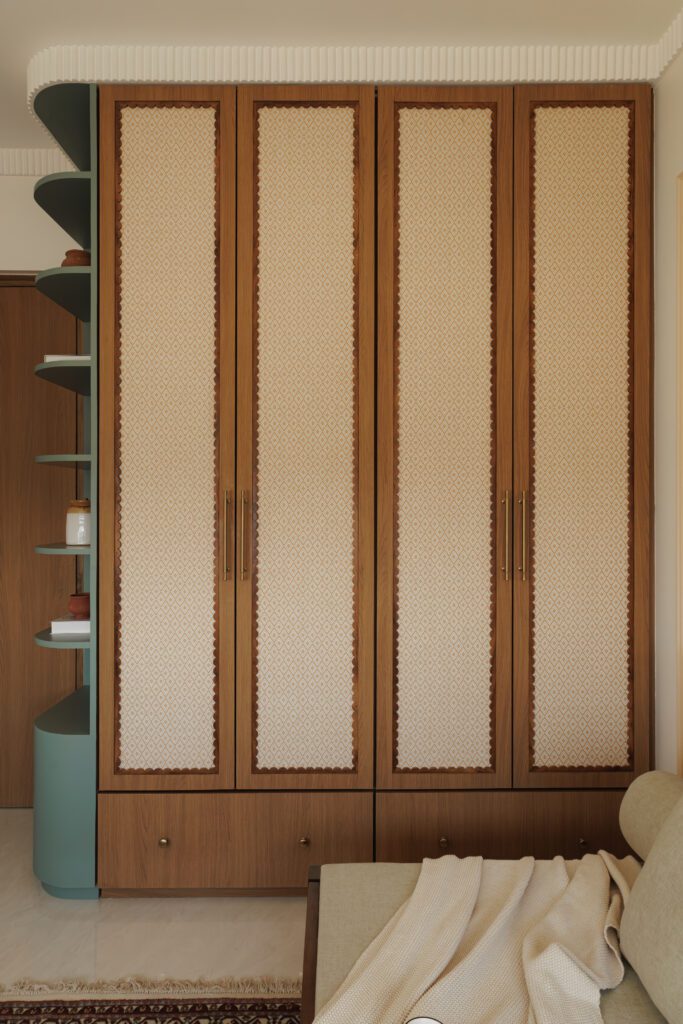
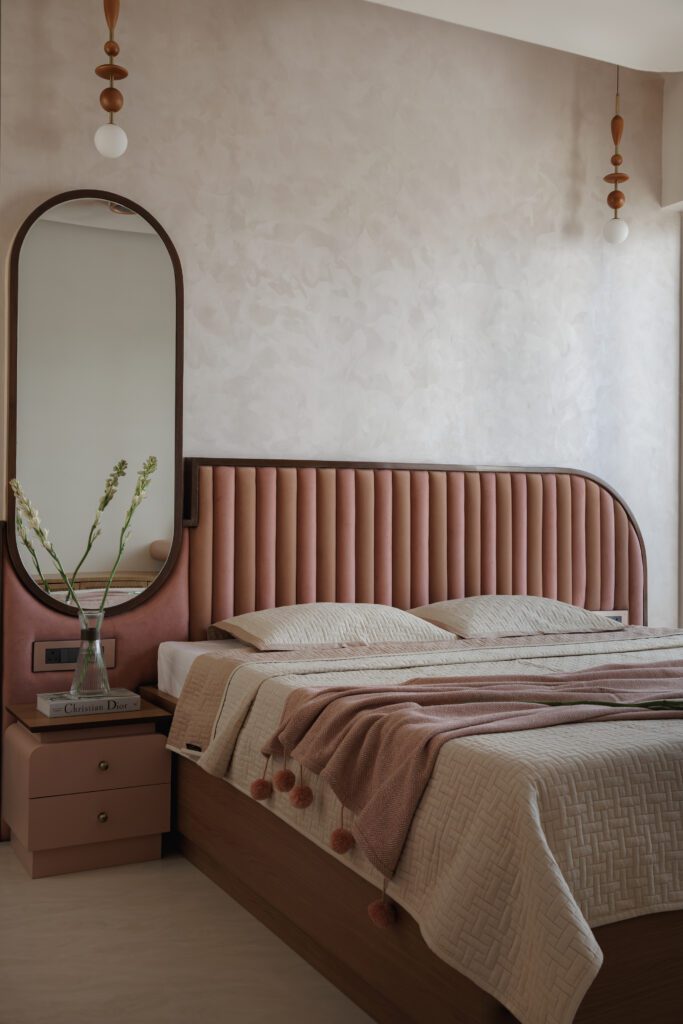
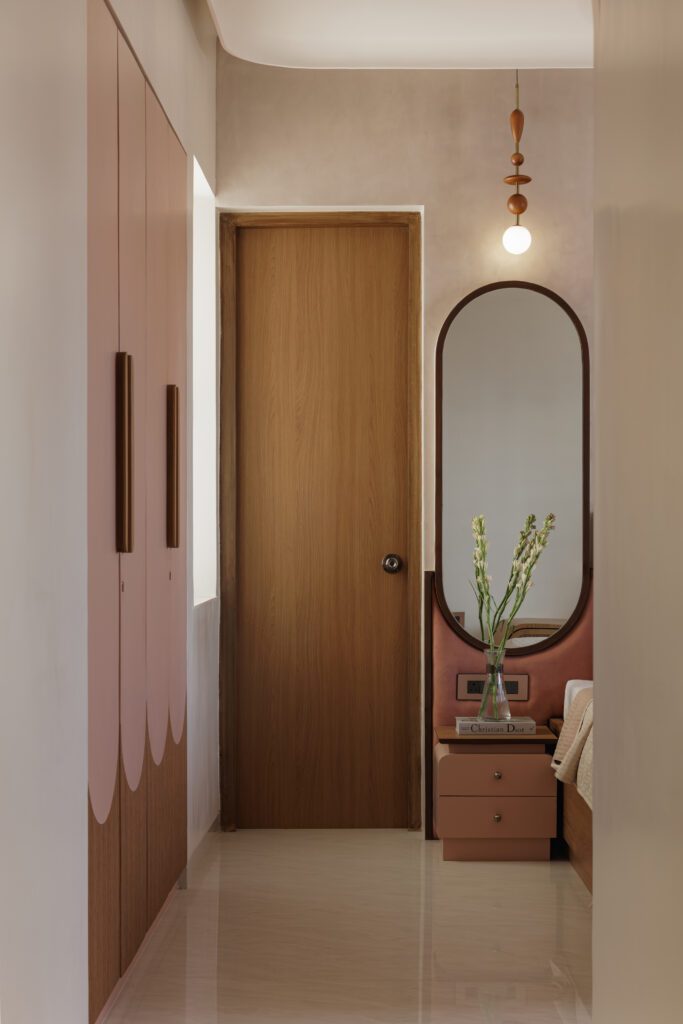
Lighting plays a quiet yet transformative role throughout the apartment. A layered lighting scheme, combining ambient, task, and accent lighting, enhances textures, highlights craftsmanship, and shifts the mood seamlessly from day to night. Pendant lights with turned-wood detailing, soft wall washers, and warm concealed lighting work together to create an atmosphere that feels intimate and welcoming, never harsh or overdesigned.
Ultimately, Asakta is a study in balance. It demonstrates how a compact city apartment can be both practical and poetic, where modern minimalism coexists with cultural memory, and every detail feels intentional. Rooted in tradition yet attuned to contemporary life, the home stands as a refined urban sanctuary – quietly luxurious, deeply personal, and designed to age gracefully with its inhabitants.
Fact File
- Project Name: Asakta
- Project Type: Residential Apartment
- Area: 770 sq. ft.
- Location: Kanjurmarg, Mumbai
- Designed By: InsideStory Studio
- Photography: Studio Beyond Walls