There is a particular kind of design intelligence that refuses to choose between stillness and exuberance. Most interiors settle for one register: either the quiet restraint of raw materiality or the bold confidence of saturated colour. Salmon Pink & Co. have, with AOMI, made a compelling argument that these two impulses need not be in opposition. In a 2.5 BHK apartment in Mangalore, they have built a home that is, at once, grounded and vivid, textured and precise.
The premise of AOMI is a wabi-sabi sensibility refracted through an eclectic colour palette: not rustic imperfection for its own sake, but an embrace of organic form, raw plaster, and handmade objects set into deliberate conversation with deep cobalt blue, forest green, and warm terracotta. What makes this unusual is that the rawness never tips into austerity, and the colour never tips into performance. The home simply lives with its own decisions, confidently.
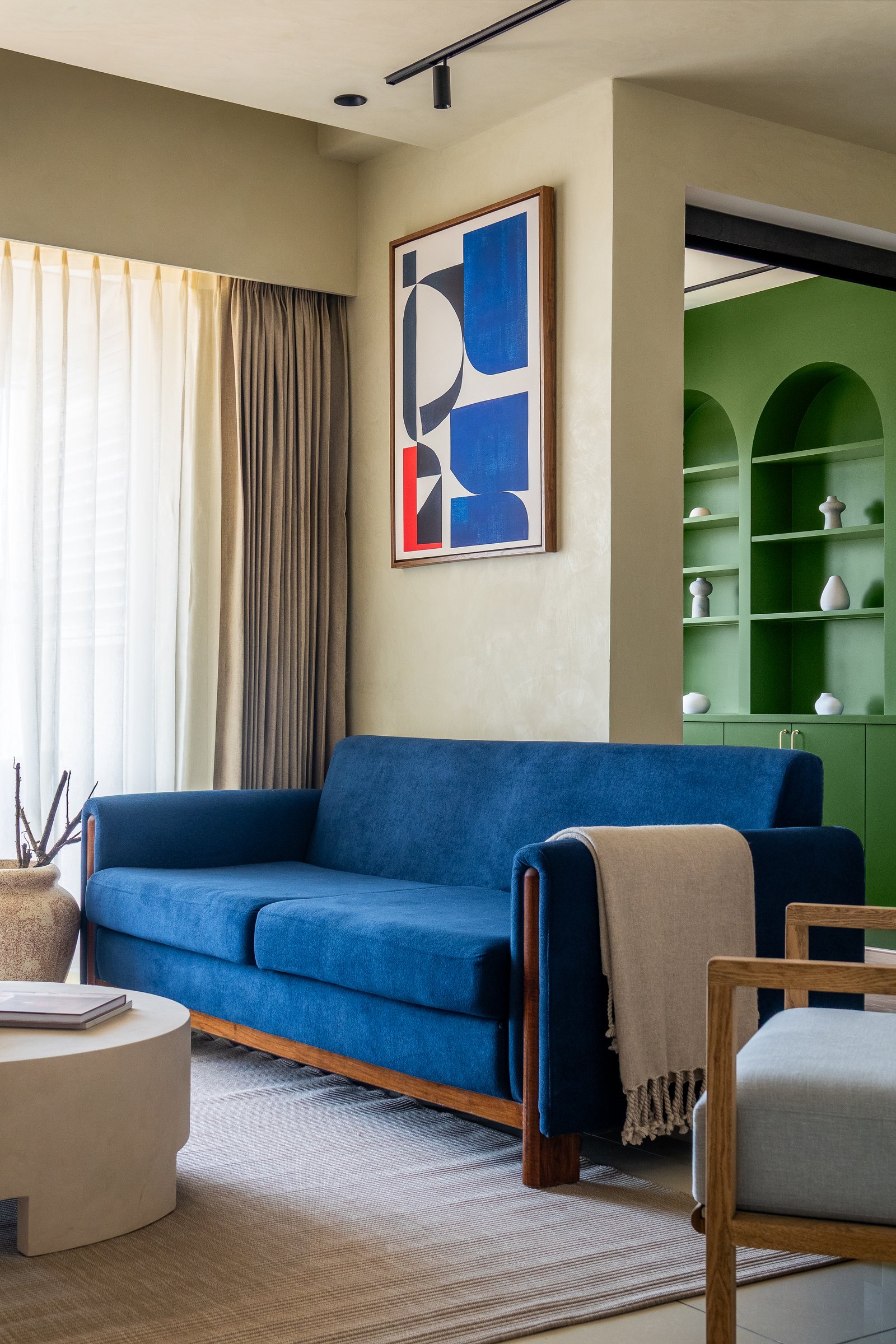
The living room announces the project’s central tension in a single frame: a cobalt blue velvet sofa with timber arms sits beneath a bold geometric artwork that echoes its palette exactly, while glimpsed to the right, a forest-green built-in shelving unit with arched niches. Raw plaster walls in warm off-white absorb this chromatic energy without competing with it.
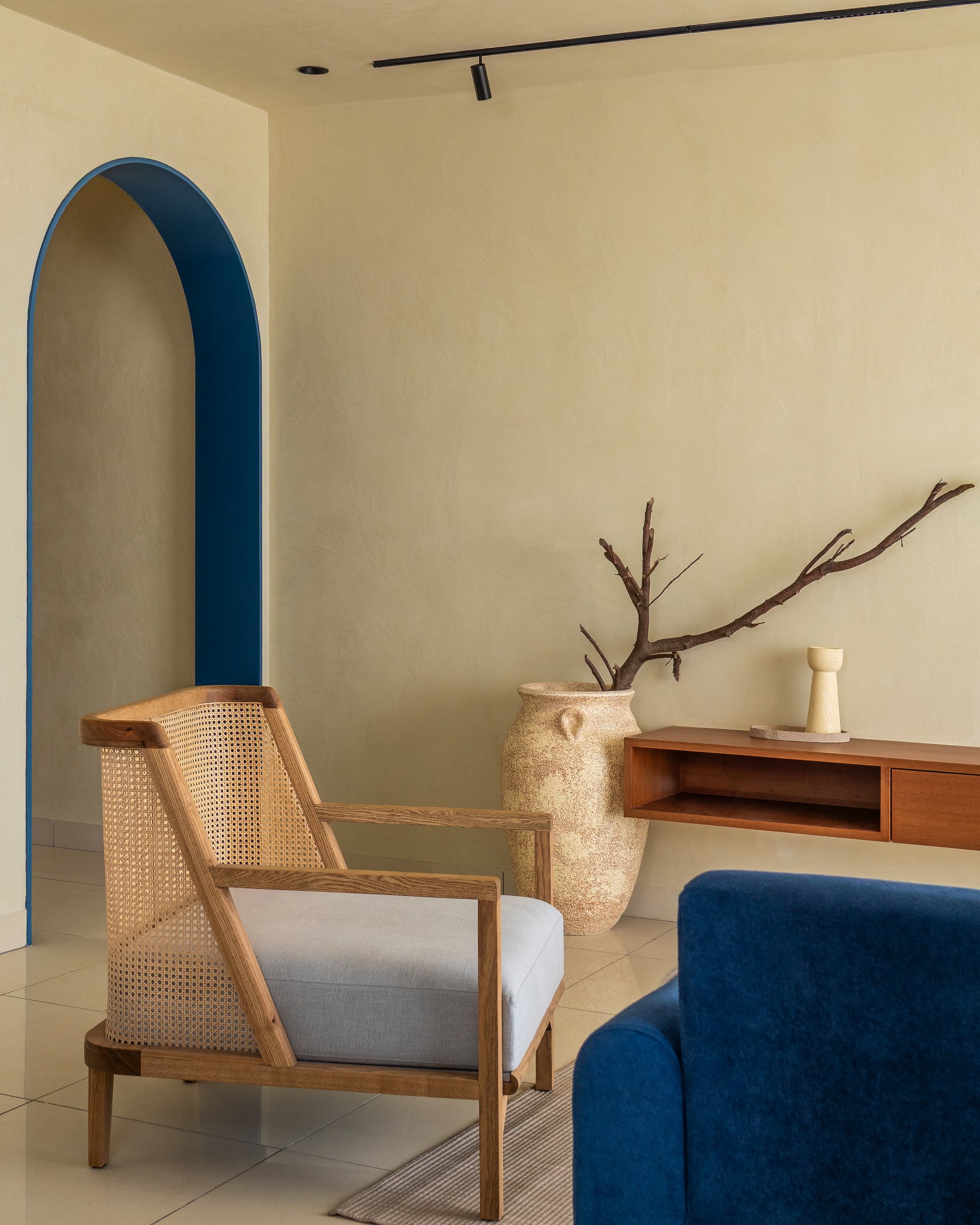
From the opposite corner of the living room, the spatial grammar becomes clearer. A blue-outlined arched opening frames the passage toward the inner rooms, its painted reveal acting as a threshold marker, not merely a structural feature. Against the plaster wall, a low timber media unit grounds the space horizontally, while a heavily textured ceramic urn holding bare branches introduces the wabi-sabi note that runs through the entire home: beauty that does not ask to be pristine.
A view framed by that same blue archway reveals the living room in its fullest spatial depth: the low cylindrical coffee table, the cane-back lounge chair, and the timber media console arranged in a sequence that draws the eye through rather than stopping it. The arch itself acts as an editorial device, not just a transition but a frame that asks you to look at the room as a composition.
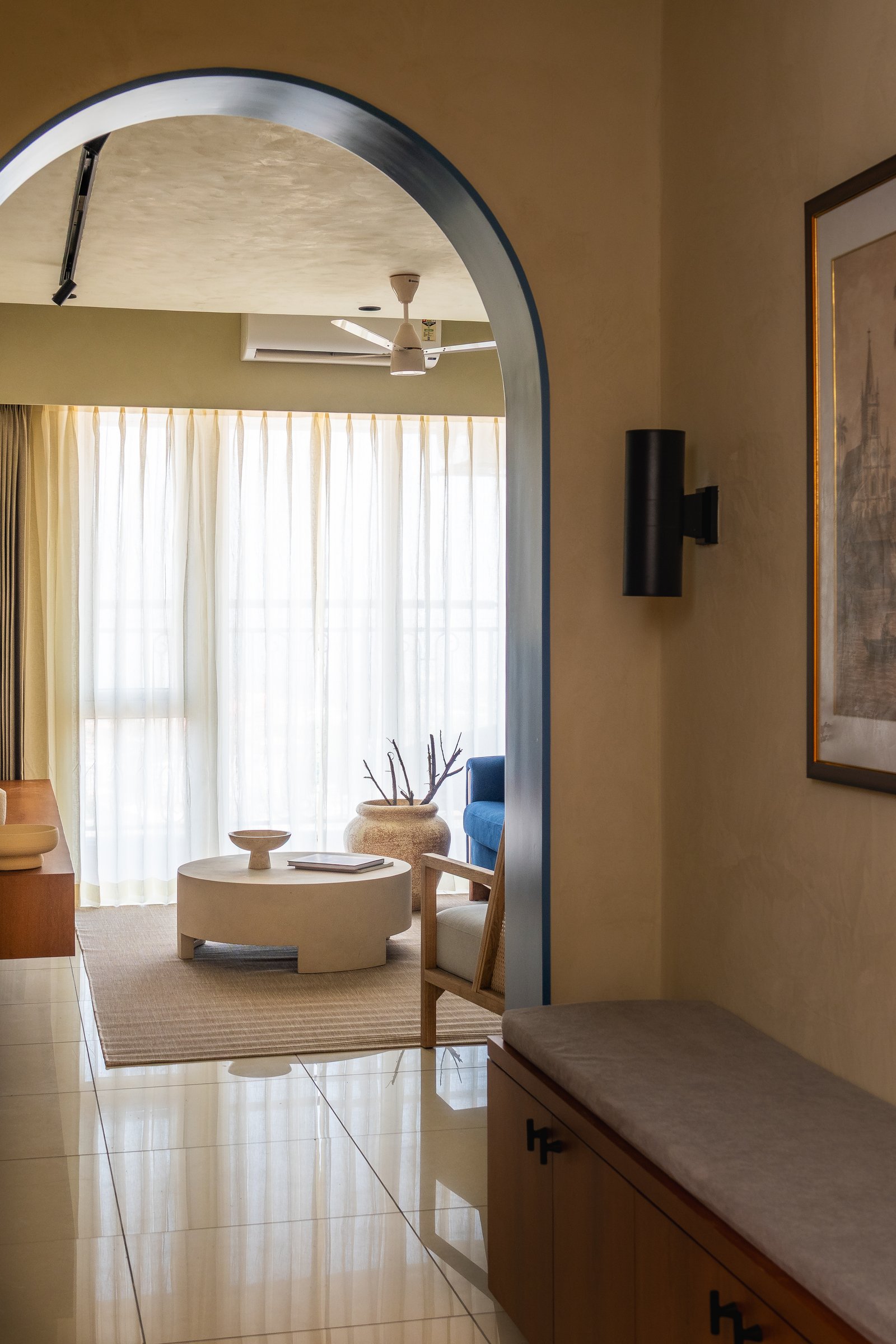
From the entry, the blue arch is the home’s first strong statement. A timber storage bench sits within the foyer, anchoring the arrival sequence before the living room opens ahead. A cylindrical wall sconce marks the threshold. The entry does not announce itself loudly, but it prepares you, through proportion and material, for what follows.
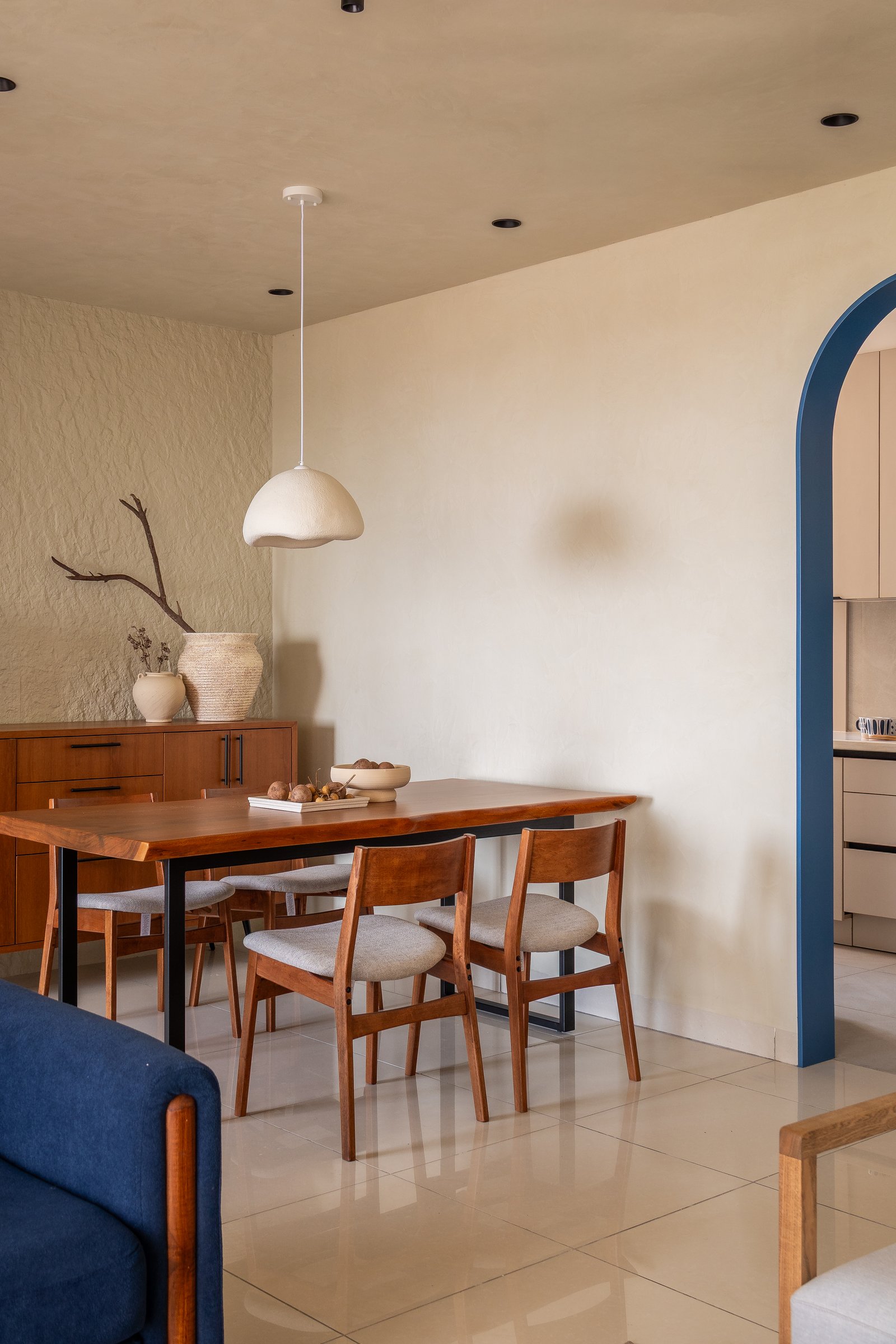
The dining area occupies the same open volume as the living room, separated by nothing more than material intention. A live-edge timber dining table on a matte black metal frame is the zone’s anchor, its natural edge introducing the kind of unresolved, organic character that the plaster walls carry in a different register. A dome-shaped pendant light in white hangs above the table, its softly irregular form rhyming with the handmade ceramics arranged throughout the home. Behind the table, a textured plaster feature wall provides the room’s single piece of deliberate roughness, a foil to the warmth of the timber.
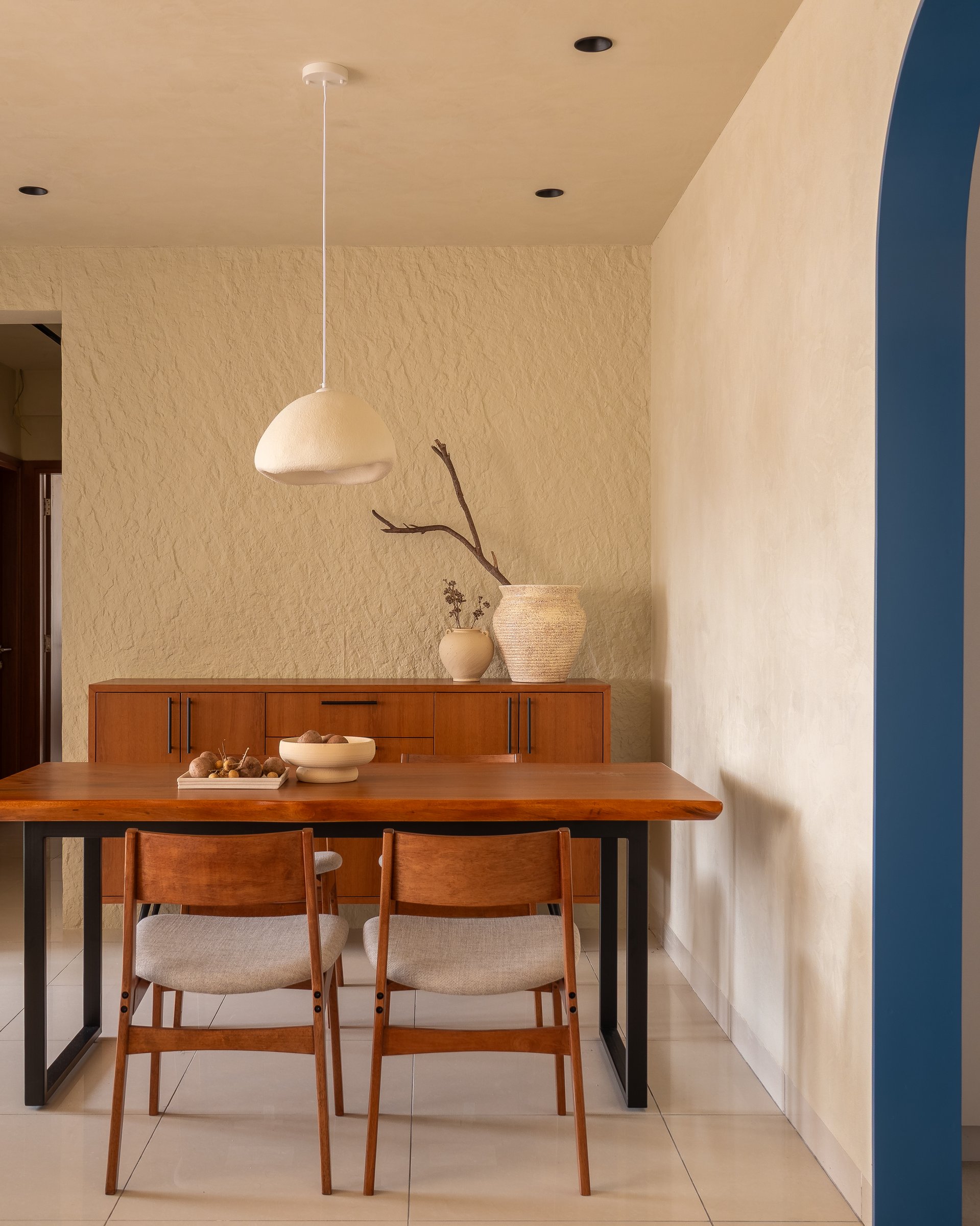
The dining nook resolves into something almost meditative. The textured wall deepens in this light, and the blue arch to the right provides a clean vertical counterpoint to the warm horizontals of the timber table and sideboard.
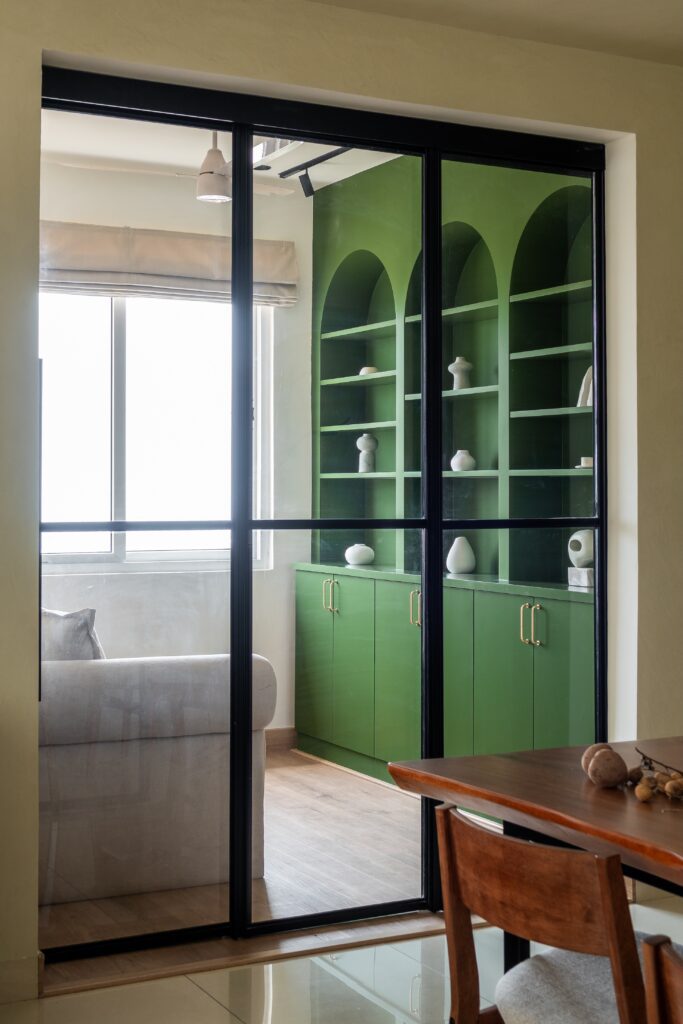
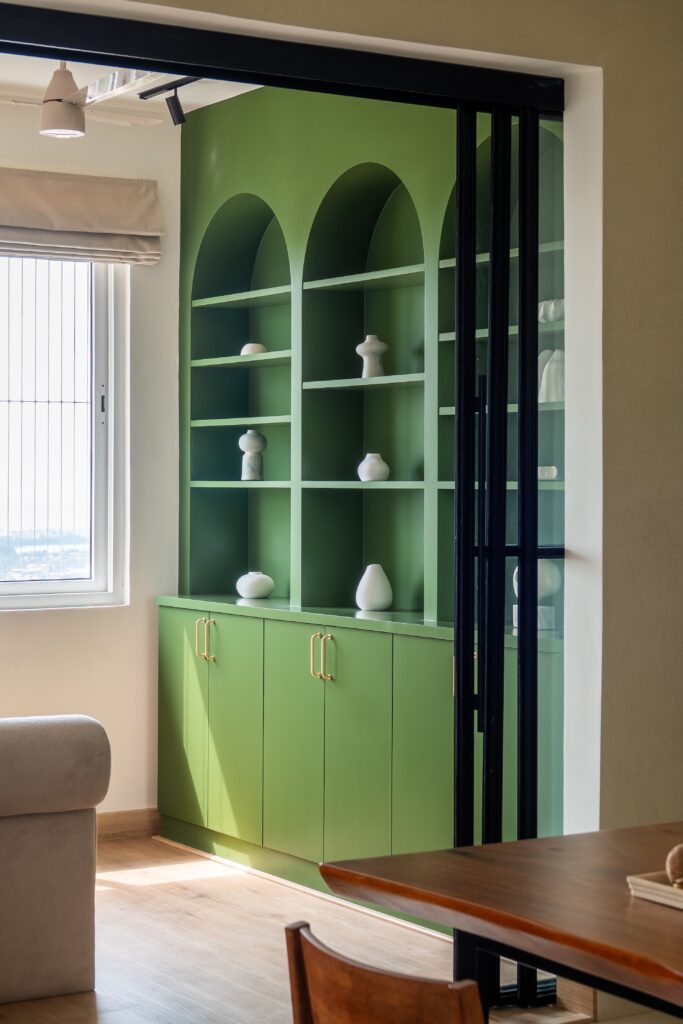
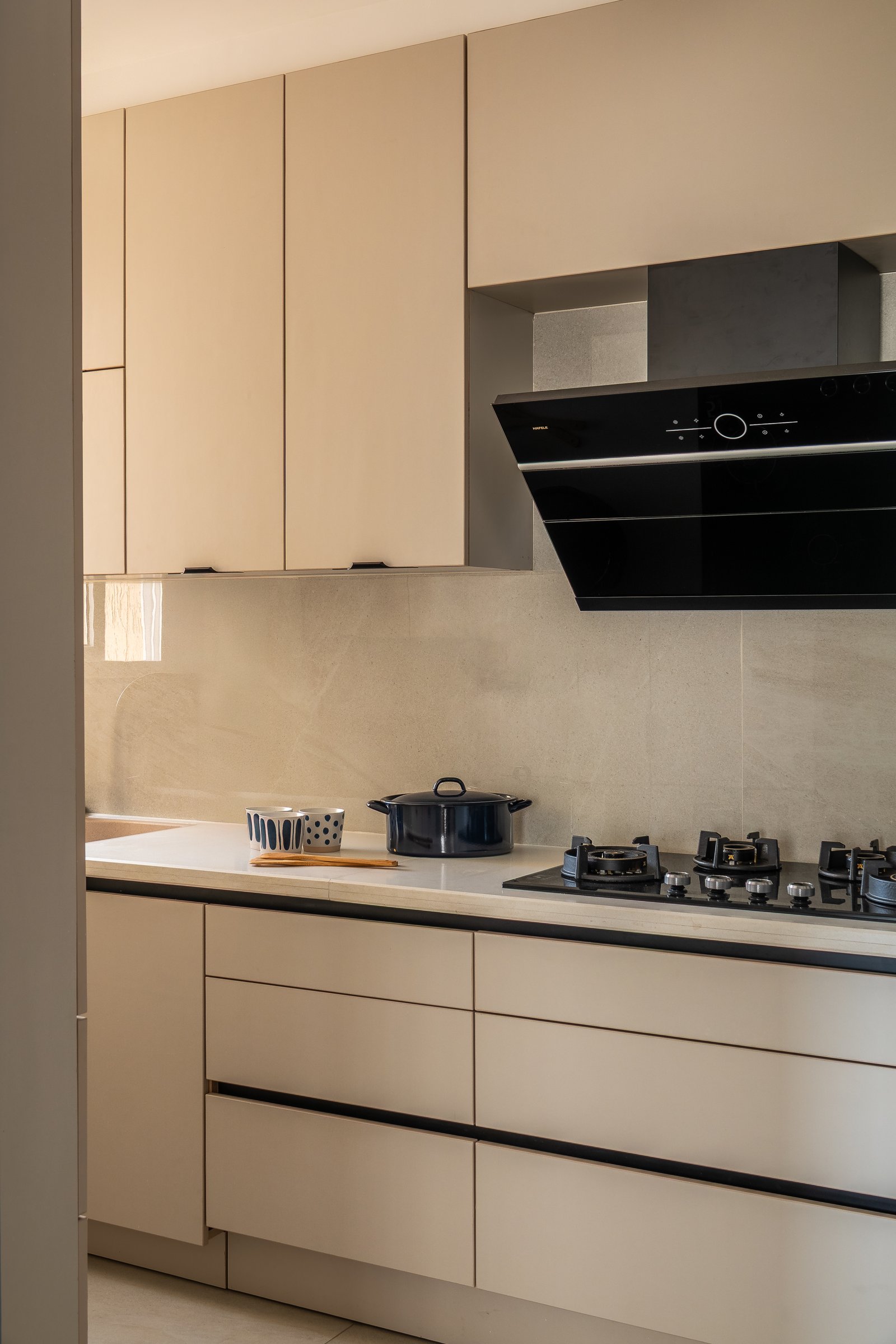
The kitchen, accessed through the arched opening visible from the dining zone, maintains a deliberate quiet after the colour confidence of the public rooms. Handleless cabinetry in warm greige, a stone-look backsplash, and matte black edging keep the palette neutral and workable. The kitchen does not carry the home’s expressive register; it holds its function cleanly and steps aside.
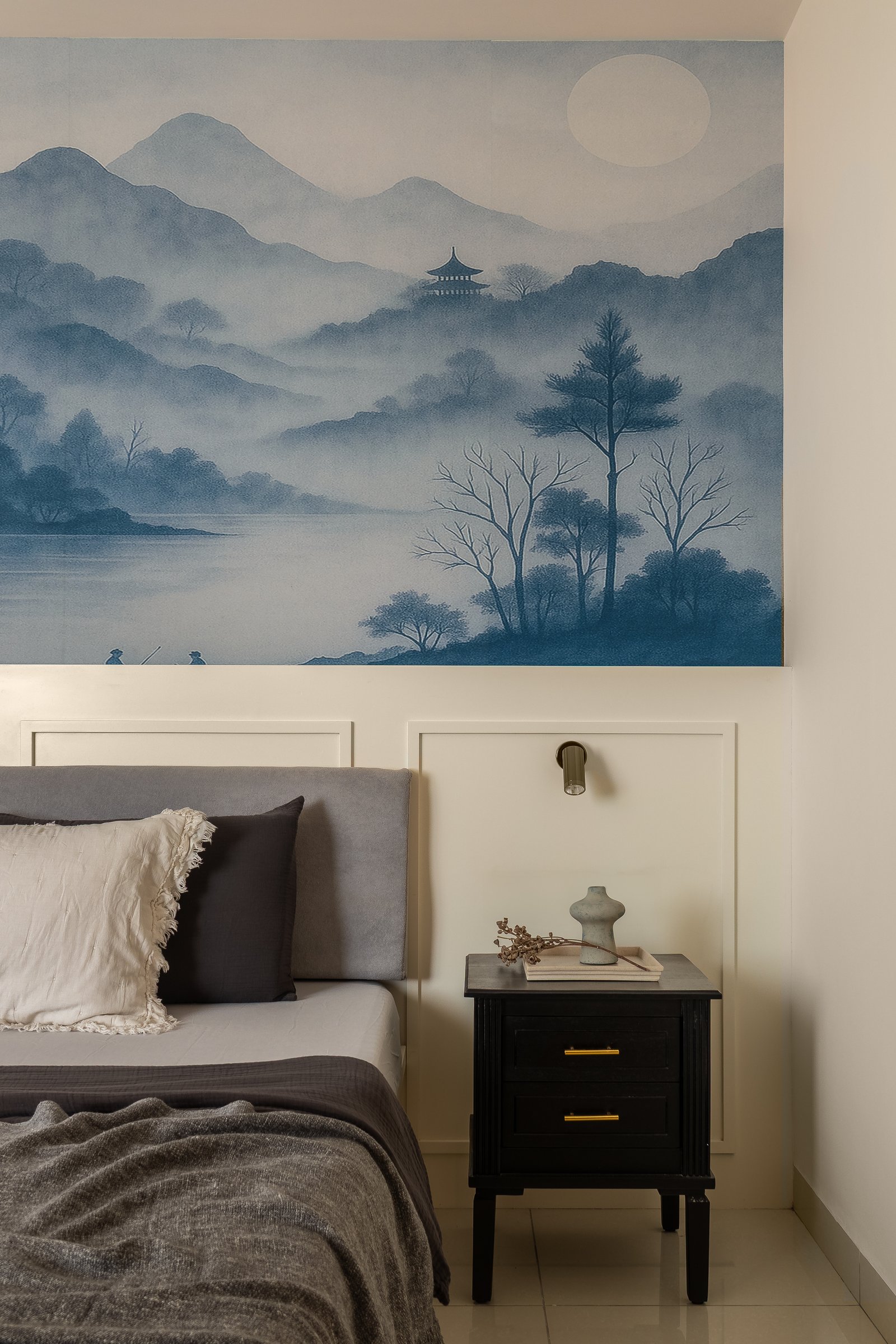
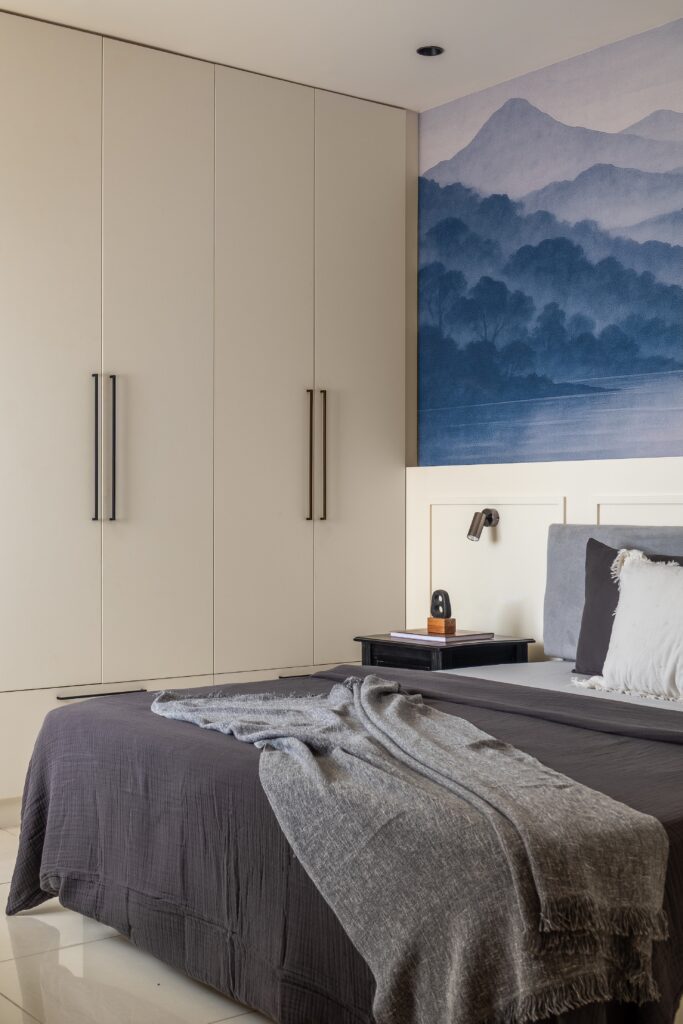
The master bedroom introduces a different design language, quieter and more layered. Above a panelled bedhead wall, a large ink-wash mural in shades of midnight blue depicts a landscape of misty mountains, water, and a pagoda half-consumed by fog. The mural’s East Asian sensibility connects to the wabi-sabi thread that runs through the public spaces, but translates it into something more intimate and still. A fluted black bedside table with brass handles grounds the composition; the contrast between its dark lacquer and the cream wall panelling below the mural is finely judged.
The cream built-in wardrobes on the opposite side are kept completely plain to allow the mural its full authority. The studio’s decision to treat storage as background rather than feature is a considered act of restraint, one that allows the atmospheric quality of the bedroom to remain undiluted.
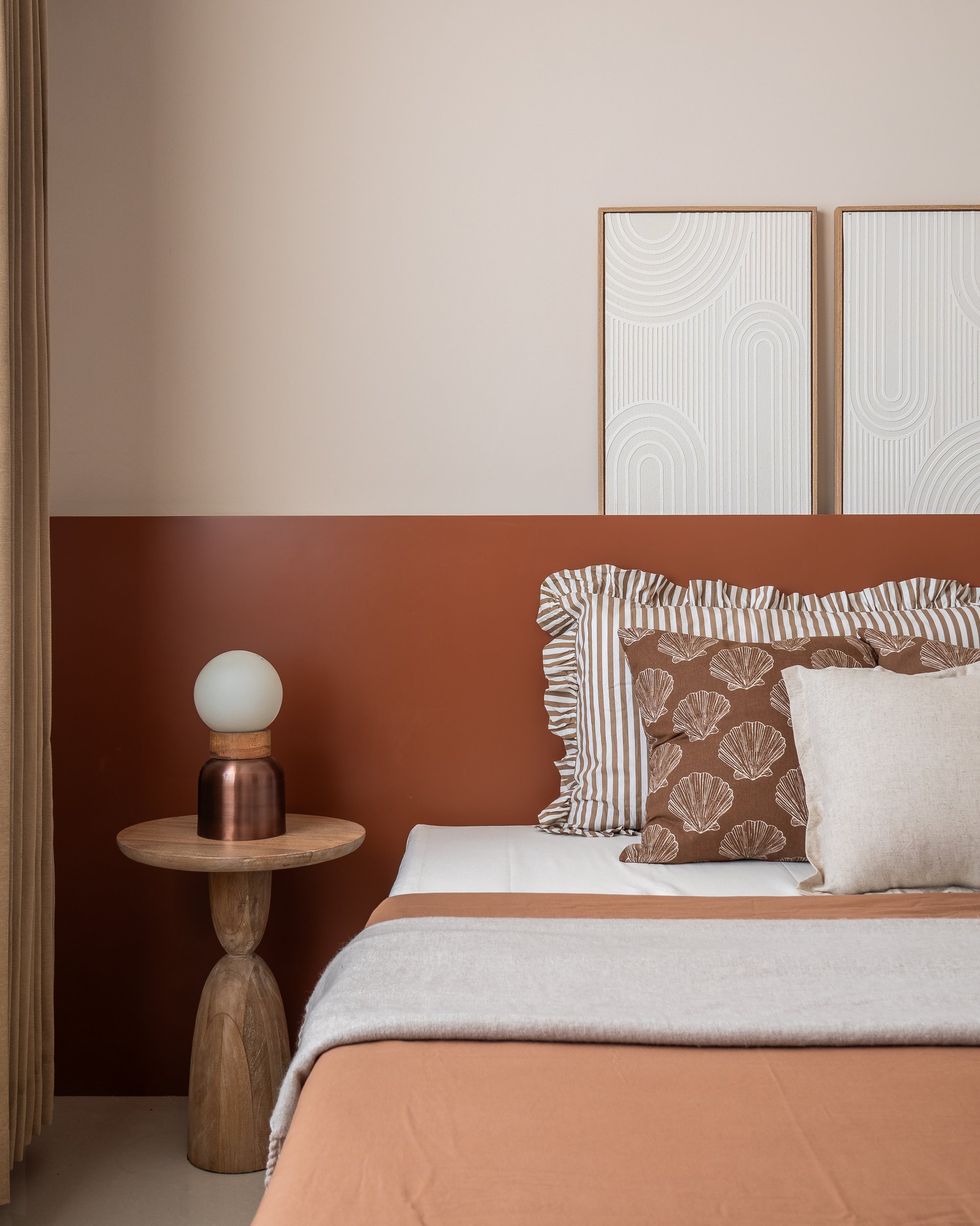
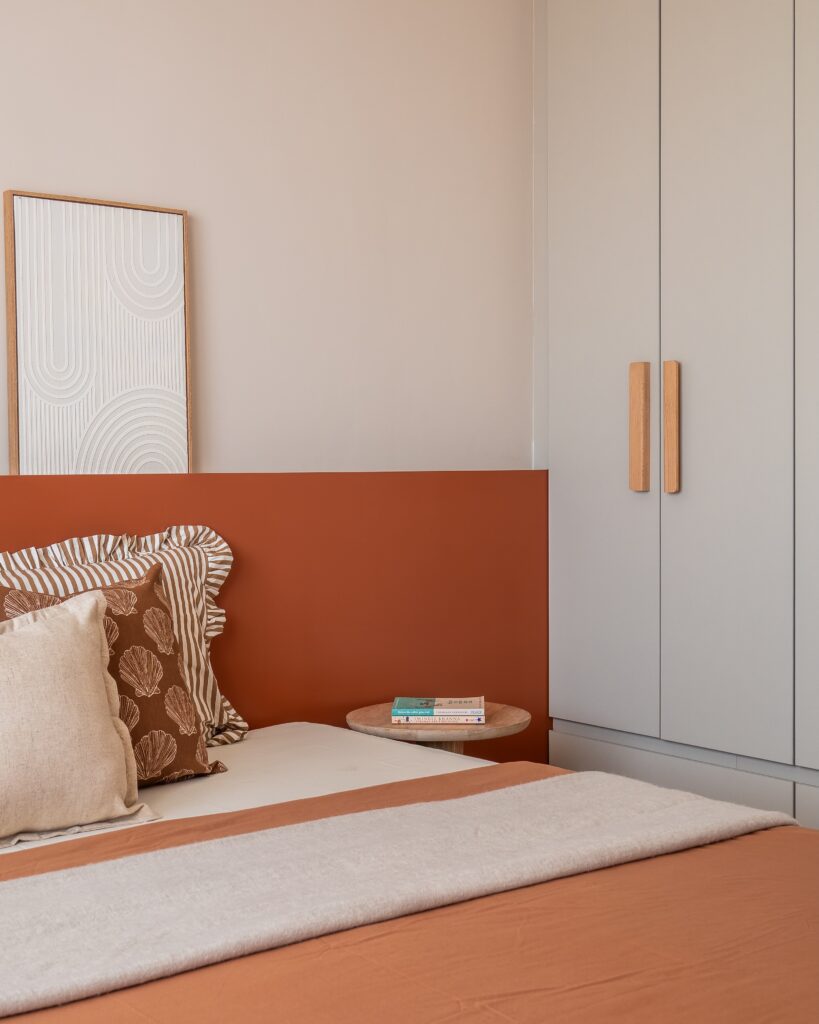
The second bedroom takes a warmer, more grounded direction. A half-height terracotta paint band runs across the wall behind the bed, creating a bold horizontal datum that turns an otherwise simple room into something with genuine spatial intent. Paired white-textured artworks in timber frames are mounted within the cream zone above, their geometric relief pattern maintaining the home’s commitment to surface interest over flat finish. The room is the most quietly joyful in the apartment.
What AOMI represents, in the context of contemporary Indian apartment design, is a rejection of the safe middle ground. The studio’s willingness to commit fully to colour, to wabi-sabi materiality, and to a consistent object language throughout a relatively compact home reflects a maturing confidence in Indian residential design that does not look outward for validation.
AOMI is evidence that a genuinely coherent interior does not require scale to make its argument. Every arched opening, every rough-plastered wall, every carefully placed vessel is part of a single sustained thought, held from entry to bedroom without apology or hedging. That consistency, more than any individual design decision, is what makes this home worth remembering.
Fact File
Project Name: AOMI
Design Studio: Salmon Pink & Co.
Location: Mangalore, Karnataka
Type: 2.5 BHK Apartment
Photography: Vishwas Dhulesia