There is a particular confidence required to let raw materials hold the centre of a residential interior, to trust that exposed brick and hand-finished plaster can carry the emotional weight of a home without any decorative apology. In an era when compact Indian apartments frequently default to polished surfaces and concealed utility, Traces in Lines takes a deliberately opposite stance, building its identity from the very materials that most projects choose to hide behind cladding or paint.
Designed by Studio N8th Form, the apartment unfolds across a generous layout that includes a living-dining zone, an open kitchen, a study, a master bedroom, and a parents’ bedroom. The plan reads clearly: social life concentrated in one expansive volume, private life tucked behind a passage, and craft visible everywhere in between. What distinguishes the project is not its programme but its material discipline, the insistence that brick, concrete, timber, and cane can coexist without competing for attention.
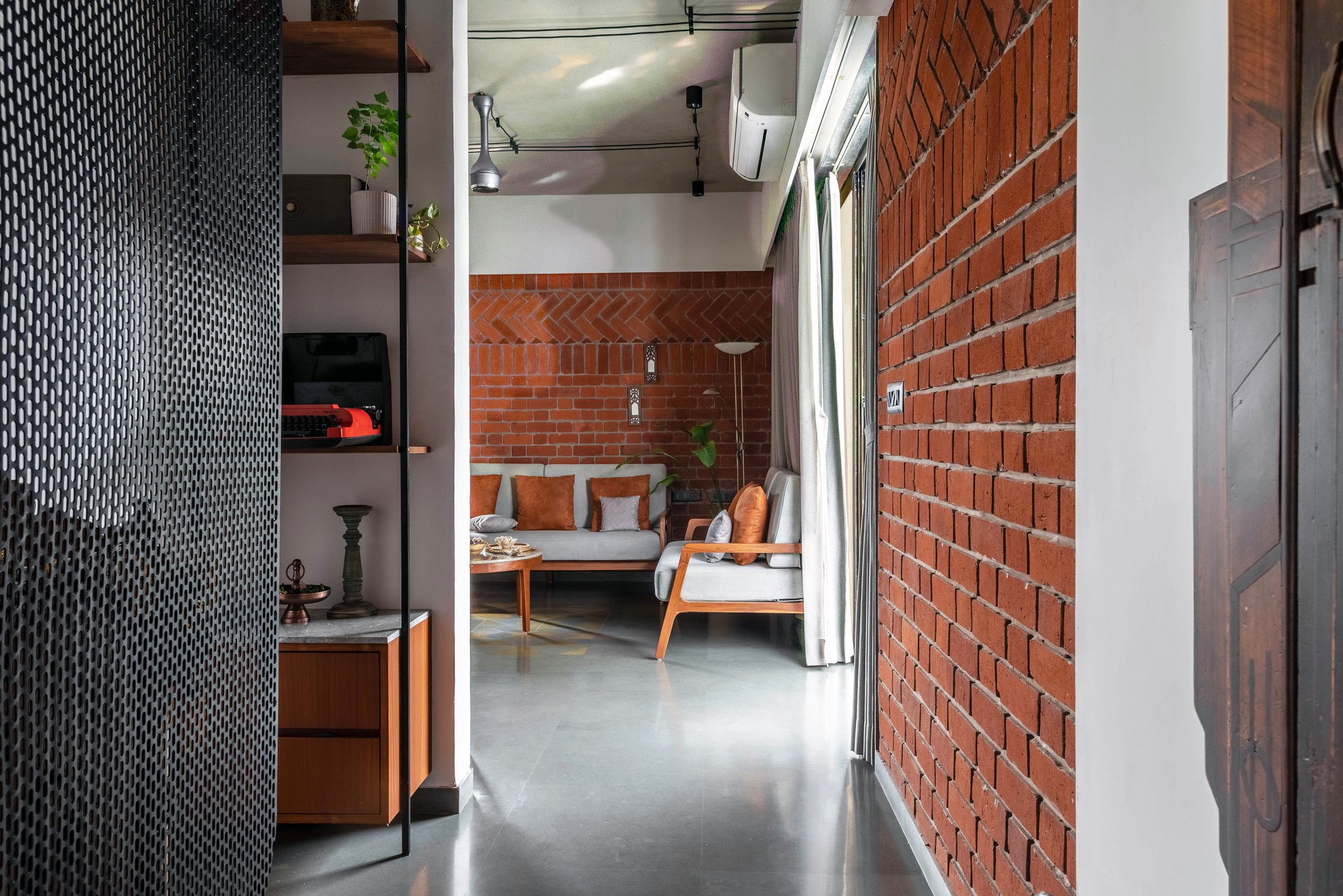
The entry corridor sets up the home’s argument immediately. A perforated metal screen flanks one side while exposed brick lines the opposite wall, and the view channels directly toward the living room, framing its seating arrangement at the end like a composed tableau.
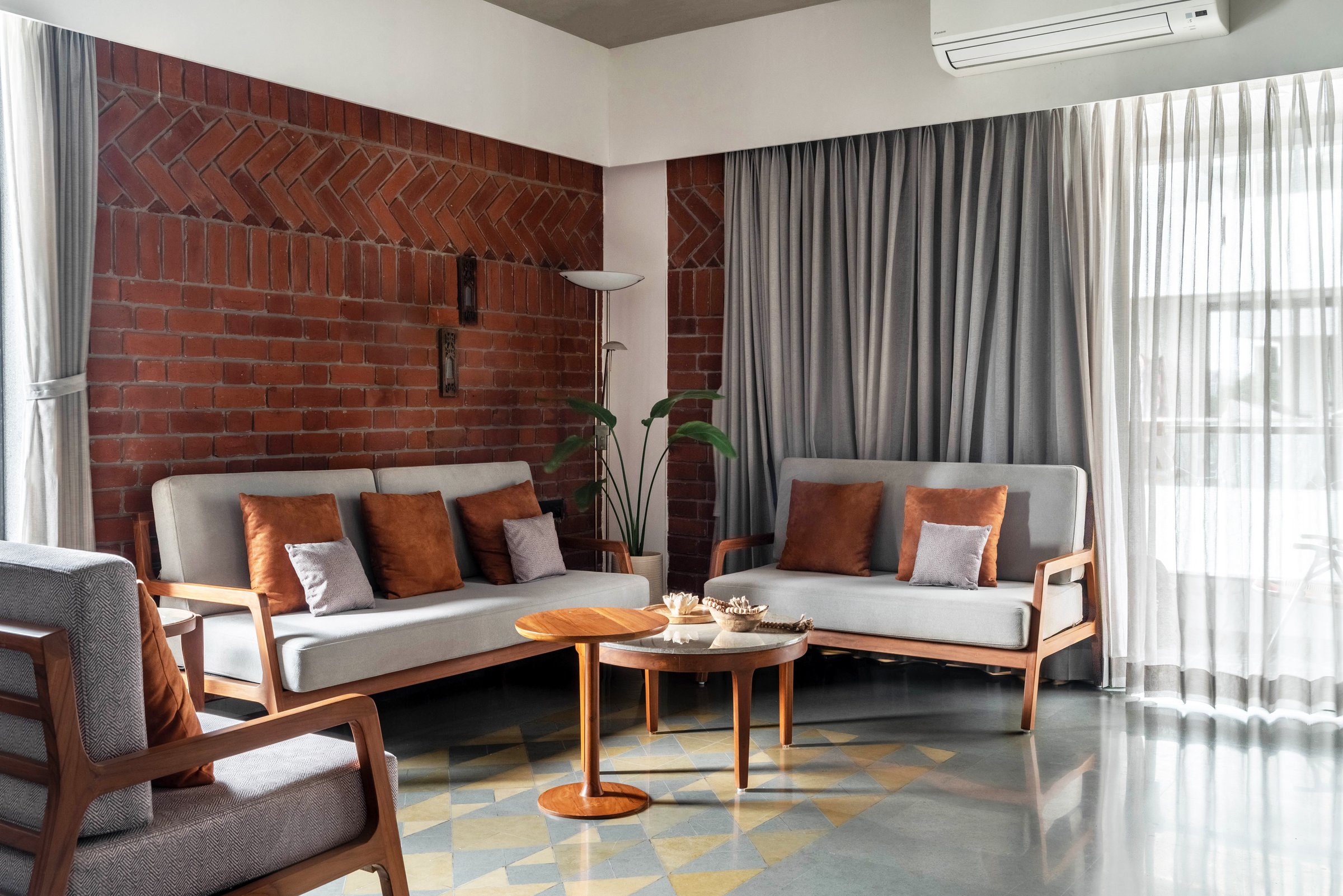
The living room is anchored by that brick wall, which shifts between standard running bond and a herringbone band running across the upper portion of the wall, a detail that reads less as decoration and more as an acknowledgement of the mason’s hand. The seating is arranged symmetrically, timber-framed and upholstered in a neutral grey, and the patterned floor tiles beneath the coffee table provide the only moment of graphic play in an otherwise restrained palette.
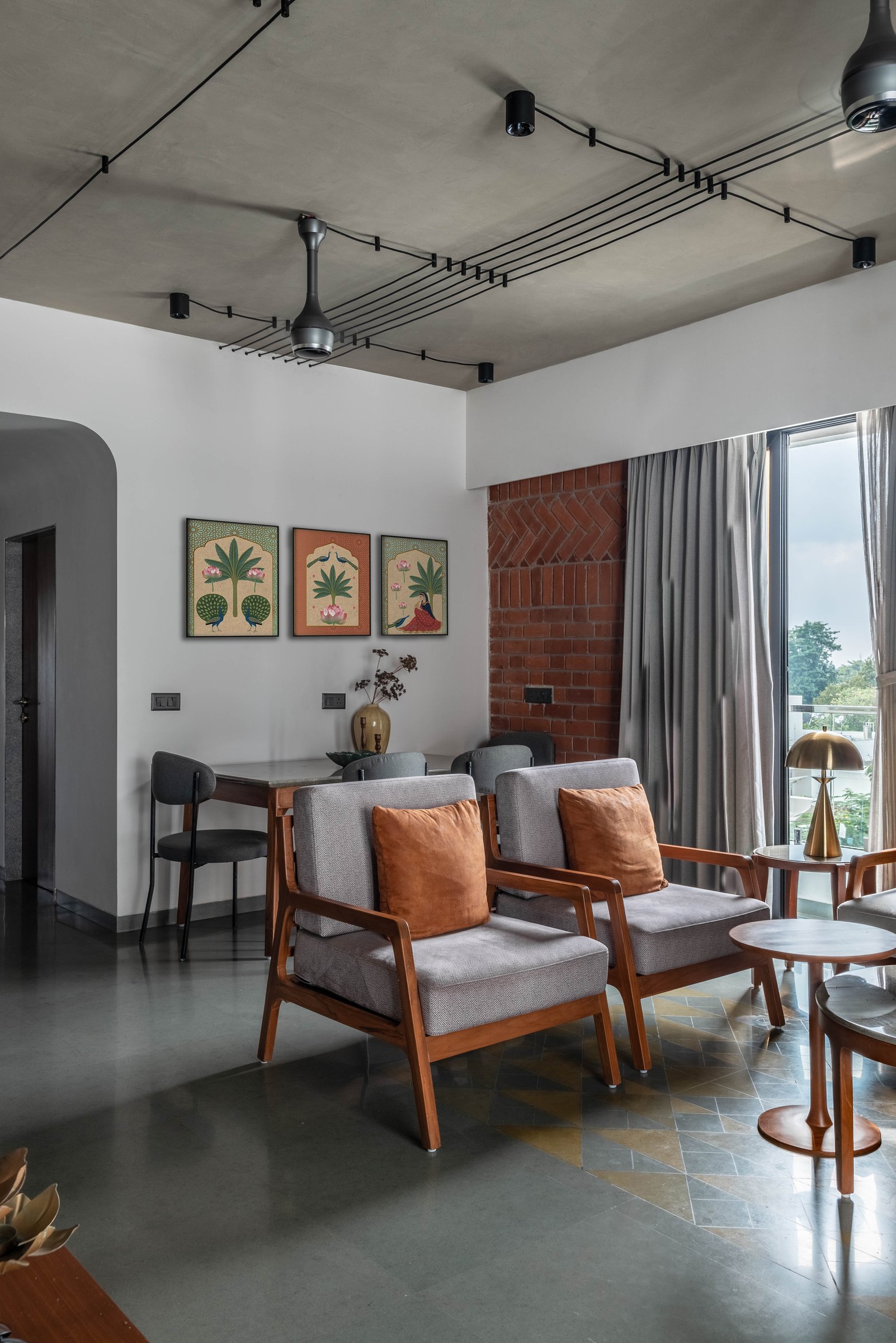
From another angle, the living zone reveals its relationship to the dining area and passage beyond. A trio of Mughal-style botanical prints on the wall between the two zones does quiet work, connecting the brick’s earthiness to a broader cultural register without overstating the reference. The exposed conduit and black track lighting across the concrete ceiling keep the industrial undertone honest.
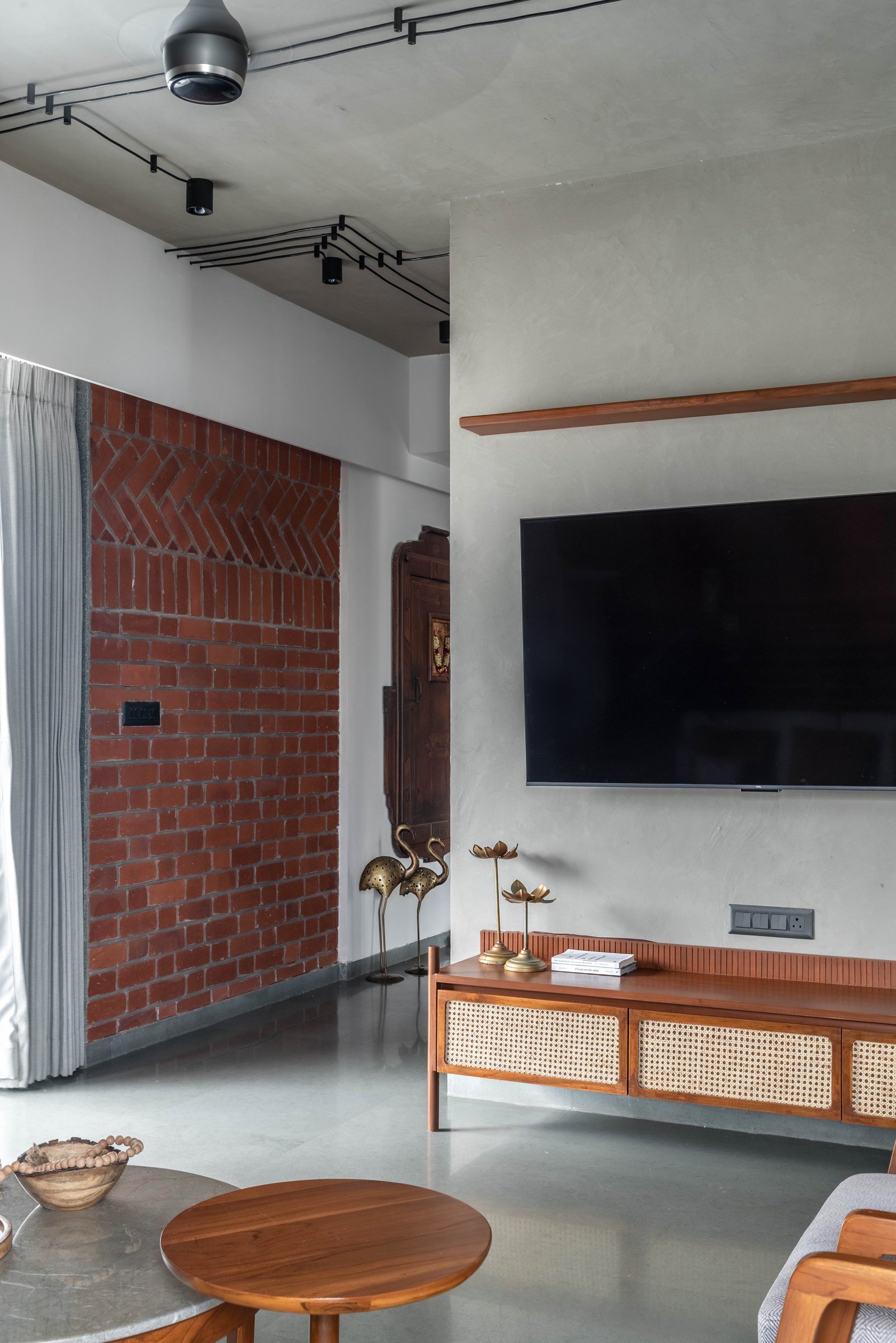
Turning toward the television wall, the material logic of the home becomes fully legible. A smooth cement-finished surface holds the screen, and a timber shelf runs continuously across to meet the kitchen cabinetry above, stitching the two zones together with a single horizontal line. The cane-panelled TV console below echoes the woven textures that appear later in the bedrooms, establishing a craft thread that runs through the entire apartment.
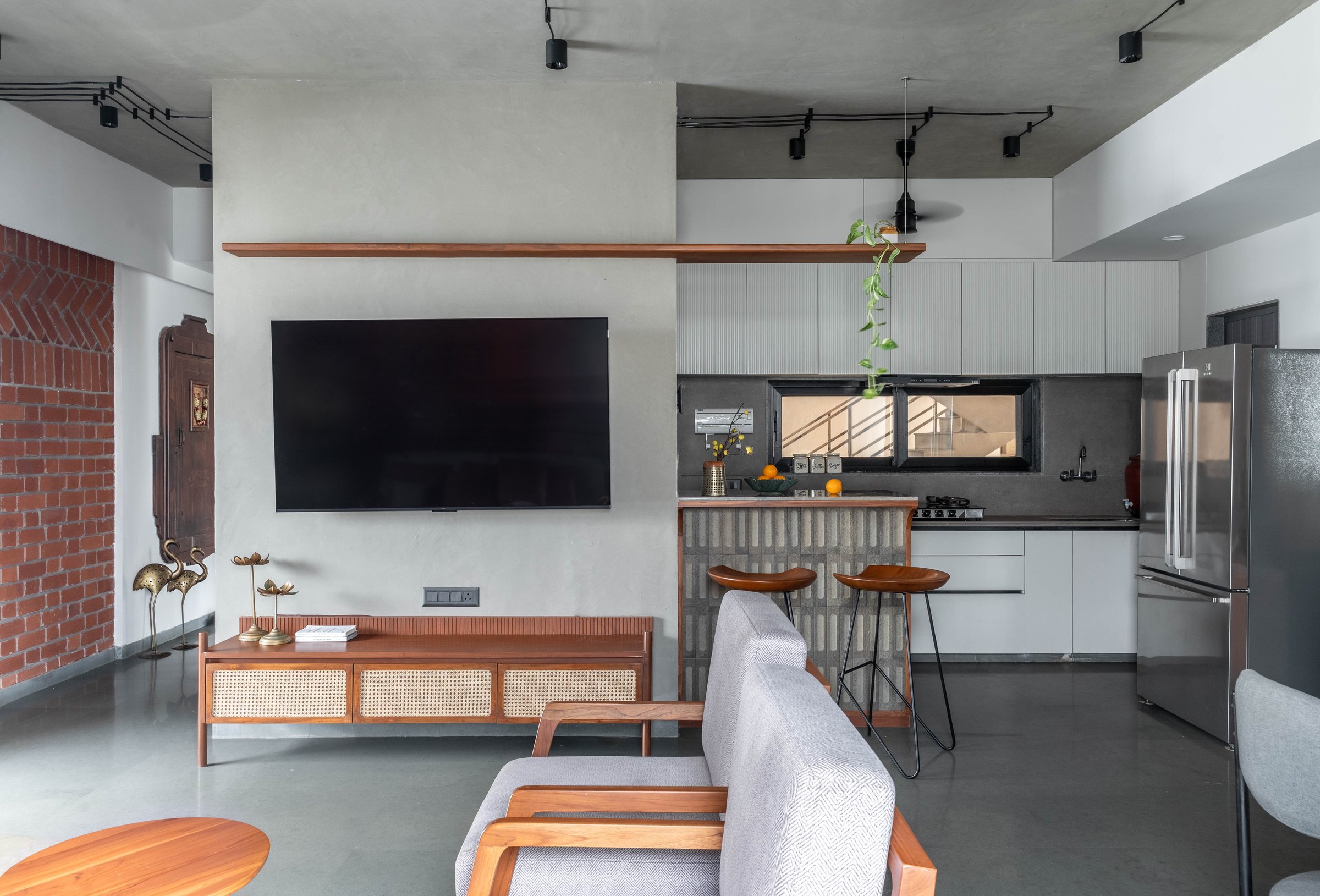
The kitchen counter, visible directly beside the media wall, is faced in patterned concrete block, a material choice that gives the breakfast bar a tactile, almost brutalist weight against the white cabinetry behind. This is where the home’s open plan pays off: cooking, eating, and watching television all happen within the same sightline, yet each zone retains its own material identity.
Seen straight on, the relationship between console, counter, and kitchen resolves into a careful composition of textures. The timber shelf acts as a datum line, dividing rough from smooth, and the pair of wooden bar stools introduce a warmer, more casual note that softens the concrete block’s graphic rigidity.
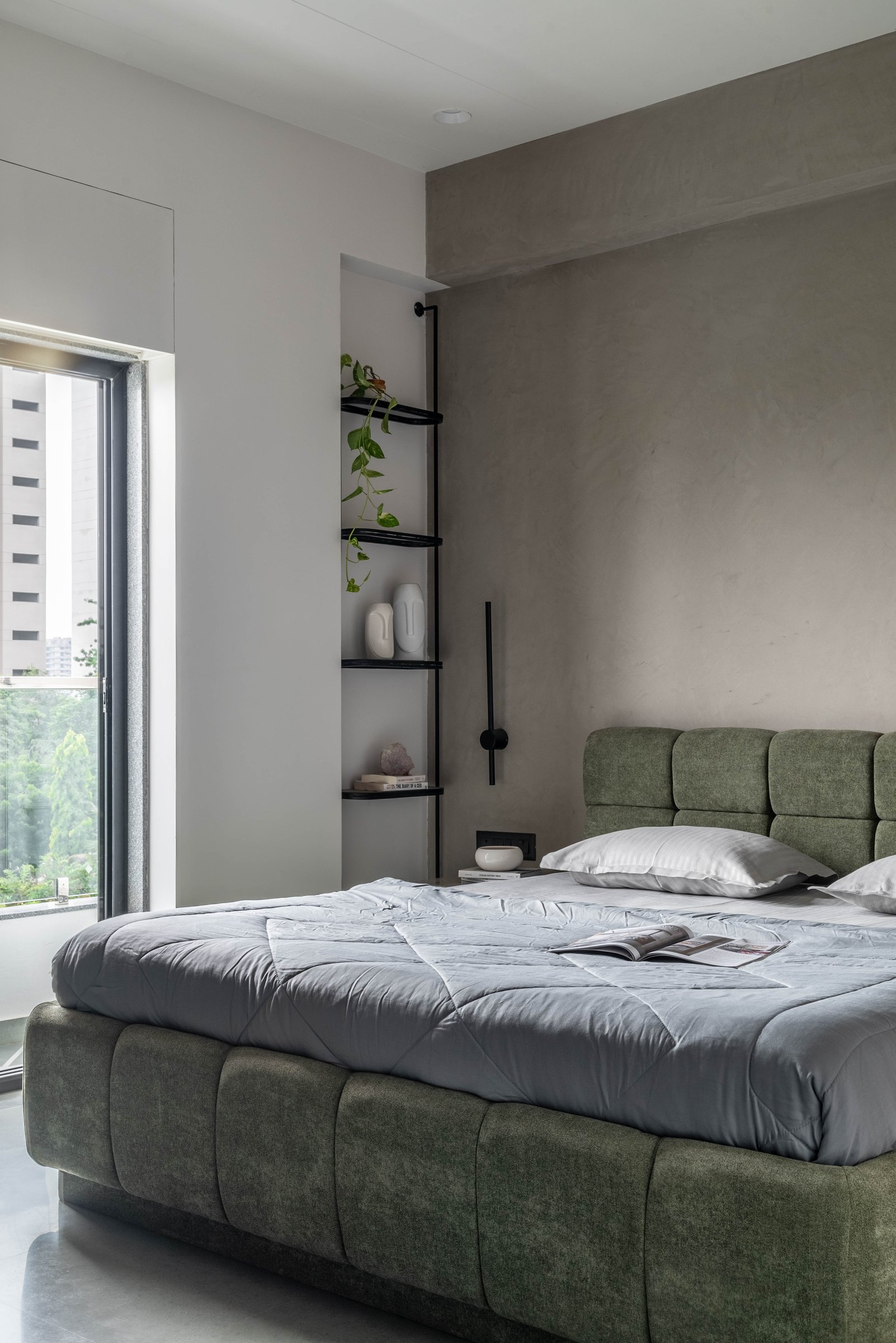
The master bedroom shifts register entirely. A tufted headboard in muted olive green sits against a cement-plastered accent wall, and the mood pivots from the living room’s warm earthiness to something cooler and more pared back. A slim metal shelf unit beside the bed provides vertical punctuation without adding visual mass.
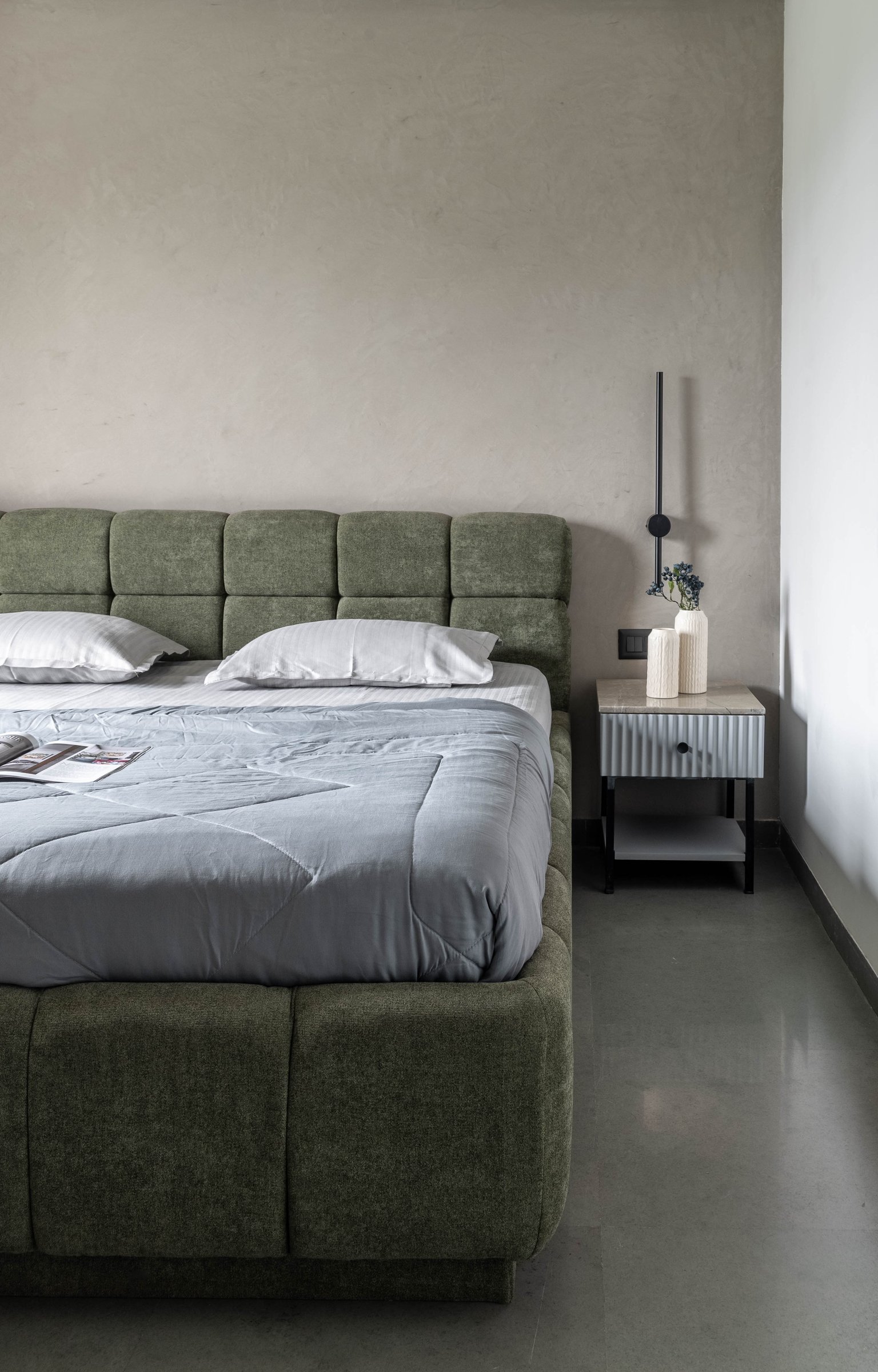
From the opposite angle, the bedroom’s restraint becomes even more apparent. The plaster wall’s subtle tonal variation and the fluted bedside table are the only surface interest the room permits, and the result is a space that feels genuinely restful rather than simply decorated to appear so.
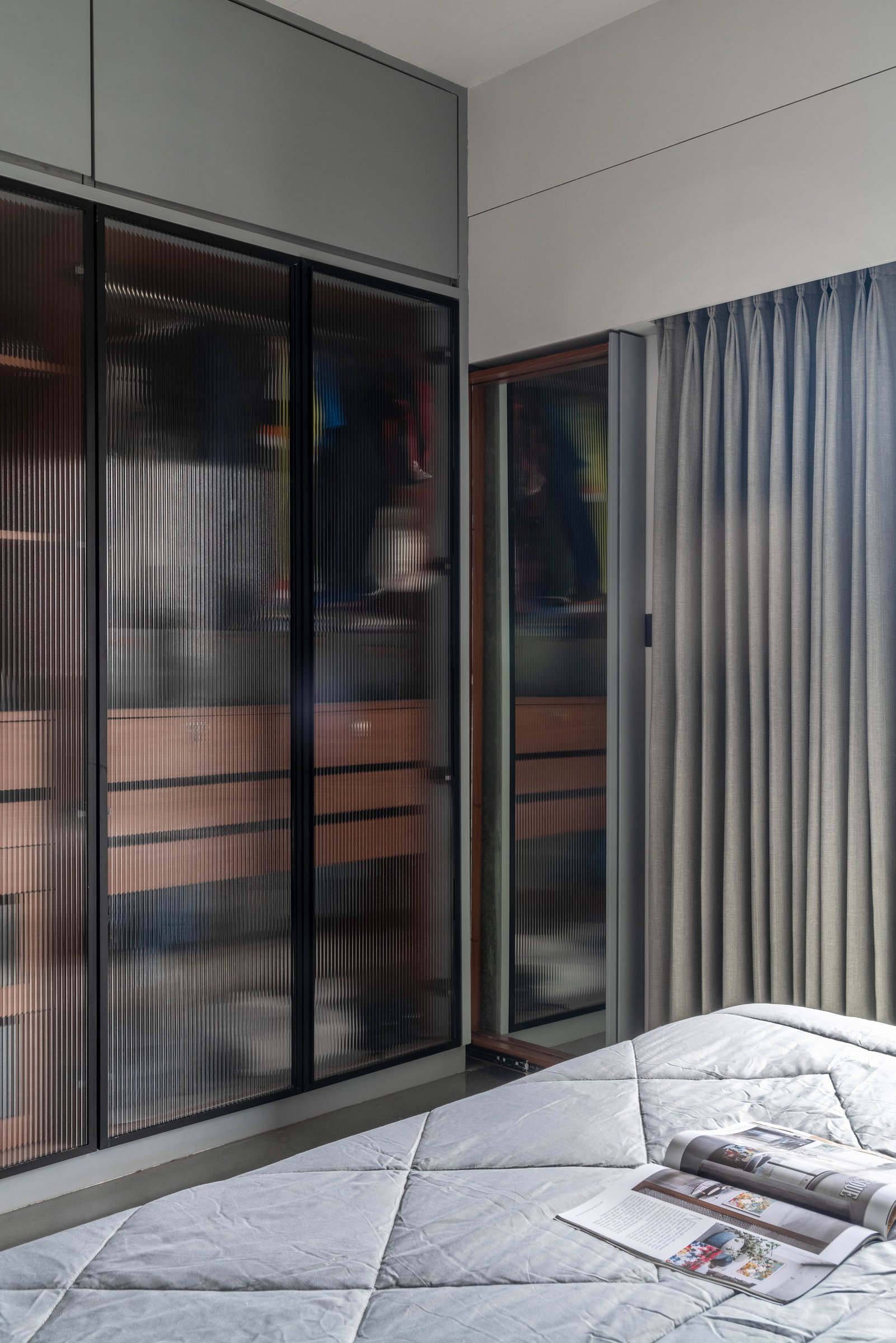
The wardrobe wall in the master bedroom uses fluted glass doors in black metal frames, allowing the contents to register as colour and shadow rather than clutter. It is a smart resolution for a room that favours visual quiet, keeping function fully present but softly veiled.
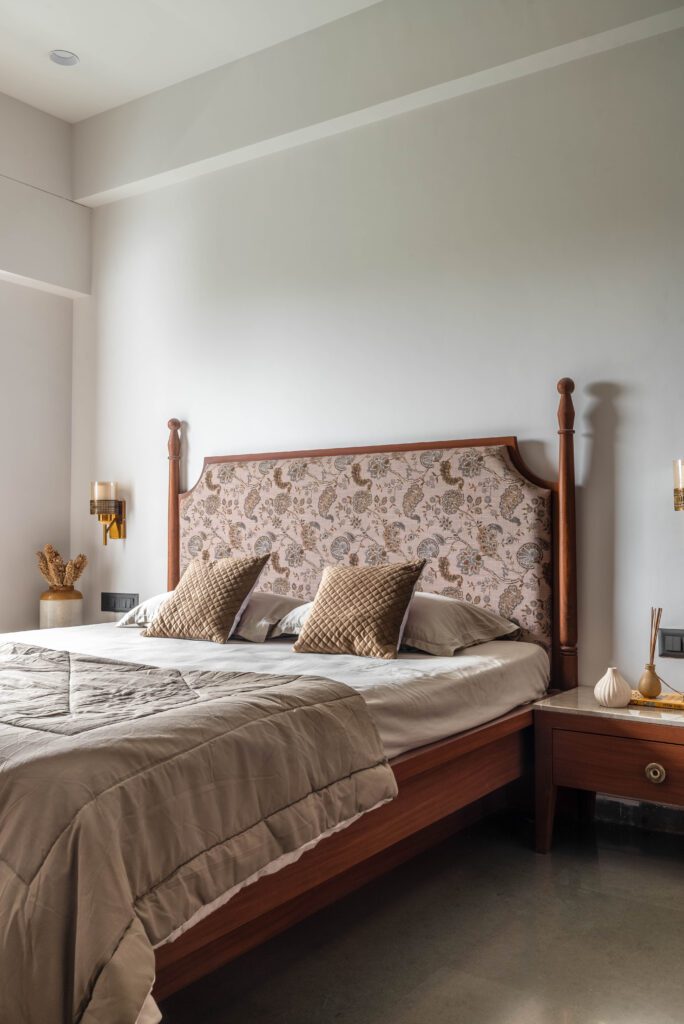
The parents’ bedroom takes a warmer, more traditional approach. A four-poster bed frame in solid timber carries an upholstered headboard in a floral kalamkari-style print, and brass wall sconces flank the bed with a warm, amber glow. Where the master bedroom suppresses ornamentation, this room gently embraces it.
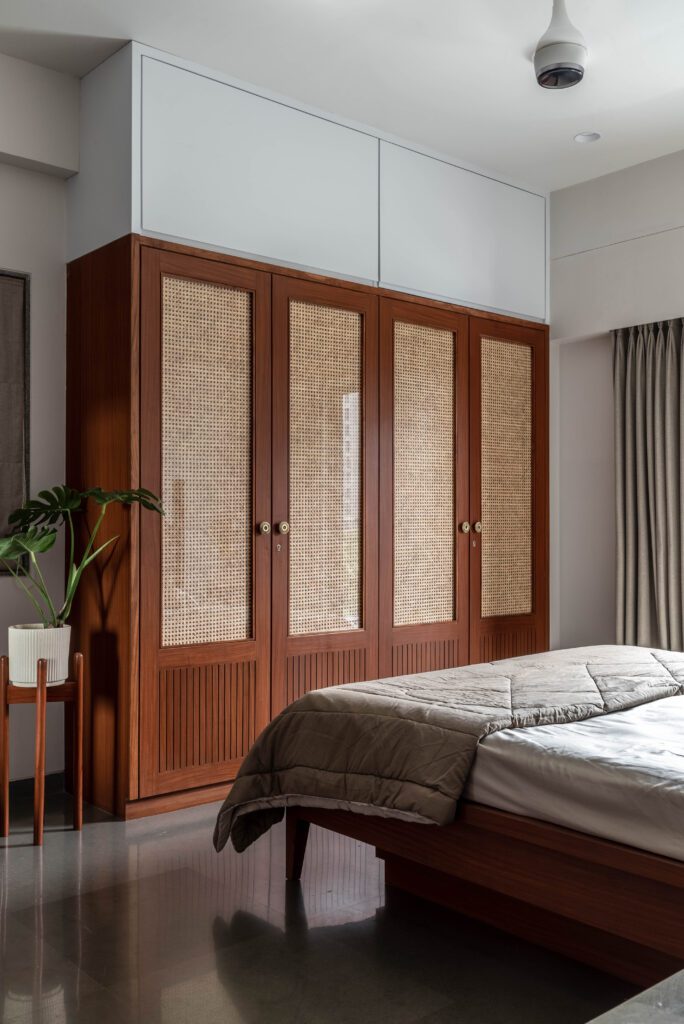
The wardrobe here is the room’s defining piece of joinery: the lower section features cane-panelled doors set within timber frames, with fluted detailing on the lower panels, while plain white loft cabinets above provide additional fitted storage. The timber portion reads as furniture even as the whole unit functions as cabinetry, a distinction that matters in a home where craft is treated as substance, not surface.
What Traces in Lines achieves is a material coherence that holds across very different registers, from the industrial frankness of exposed brick and concrete in the social spaces to the softer, craft-led warmth of cane and timber in the bedrooms. The studio has treated a compact apartment not as a constraint to be overcome but as a canvas where every surface decision carries visible intention, and the home is richer for that discipline.
Fact File
Project Name: Traces in Lines
Design Studio: Studio N8th Form
Location: Gujarat, India
Photography : 2613apertures
Principal Designer : Nidhi Patel