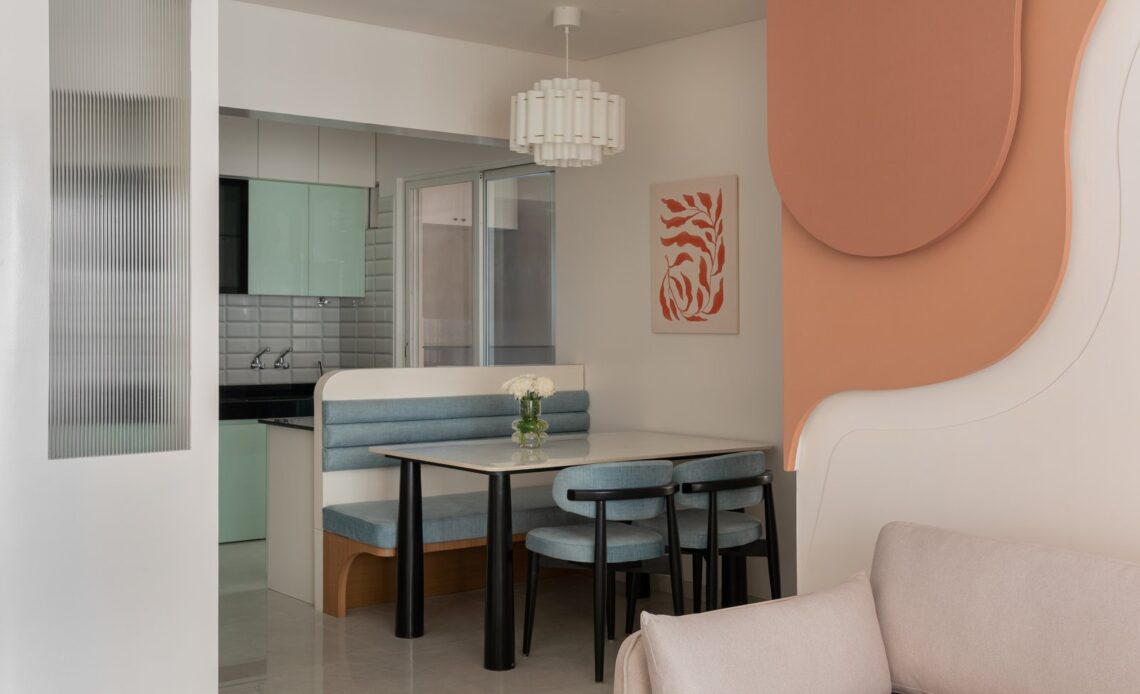
There is a particular discipline required when designing a compact apartment that wants to feel generous without pretending to be large. The temptation is to flatten everything, to strip rooms of personality in pursuit of openness. Zen, a residential project by The Archville Studio, takes the opposite approach, introducing sculptural curves and layered colour into a tight plan, and allowing these gestures to do the spatial work that square footage alone cannot.
Conceived by principal designer Ar. Priti K Dhumal, the apartment sits within the dense residential fabric of Pune. Rather than fighting the constraints of a 1BHK layout, the design treats limitation as a compositional prompt. Every wall, every junction, every piece of built-in joinery carries a gentle radius that softens the perimeter and draws the eye forward, making the home feel like a continuous sequence of rooms rather than a collection of boxes.
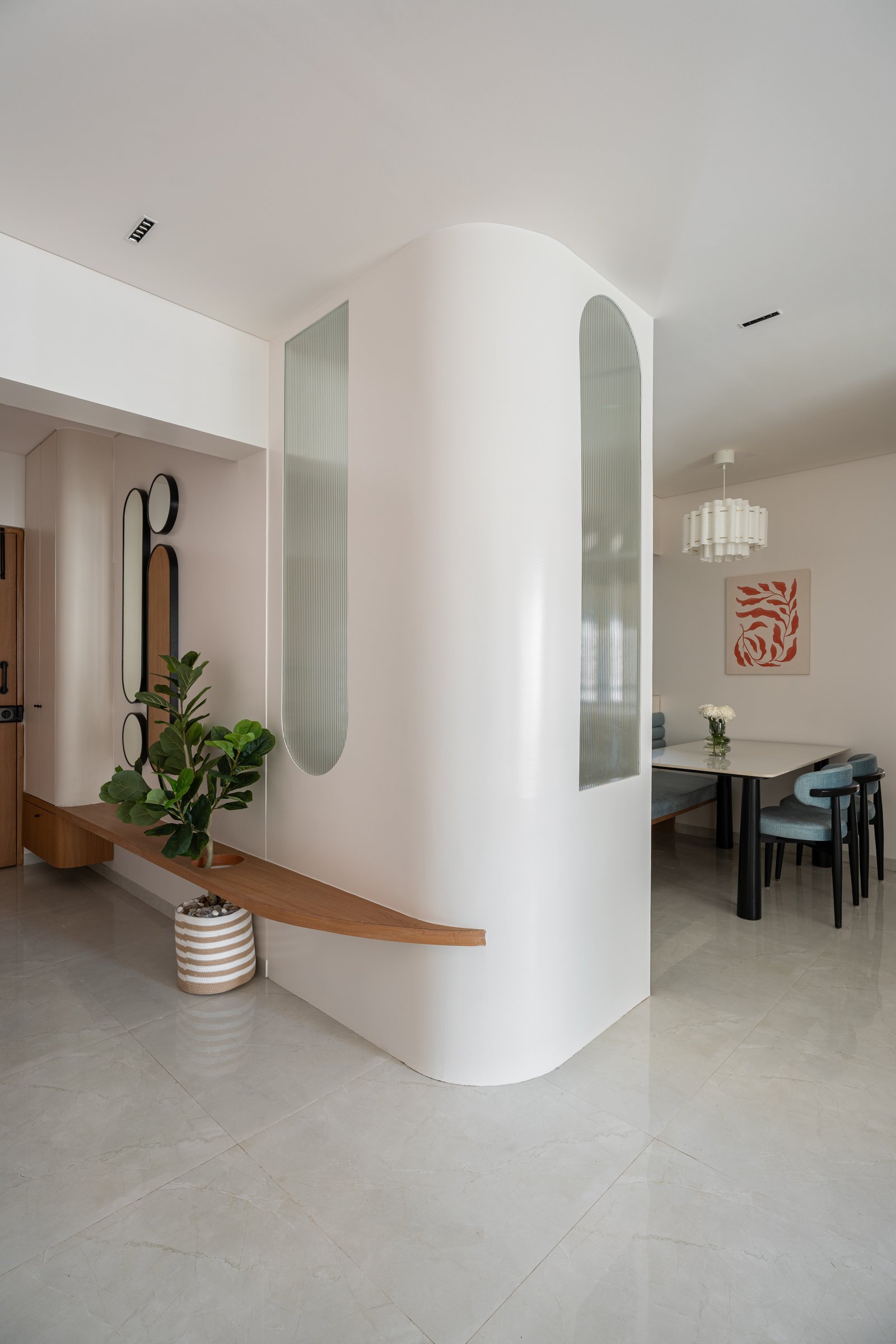
The entry sets the entire tonal register of the home. A freestanding partition wall with rounded edges and inset fluted glass panels separates the foyer from the living and dining zones, managing sight lines without ever closing them off. A floating timber ledge runs along its mid-section, curving as it meets the wall, and it is this single detail that announces the project’s commitment to craft-led softness over hard geometry.
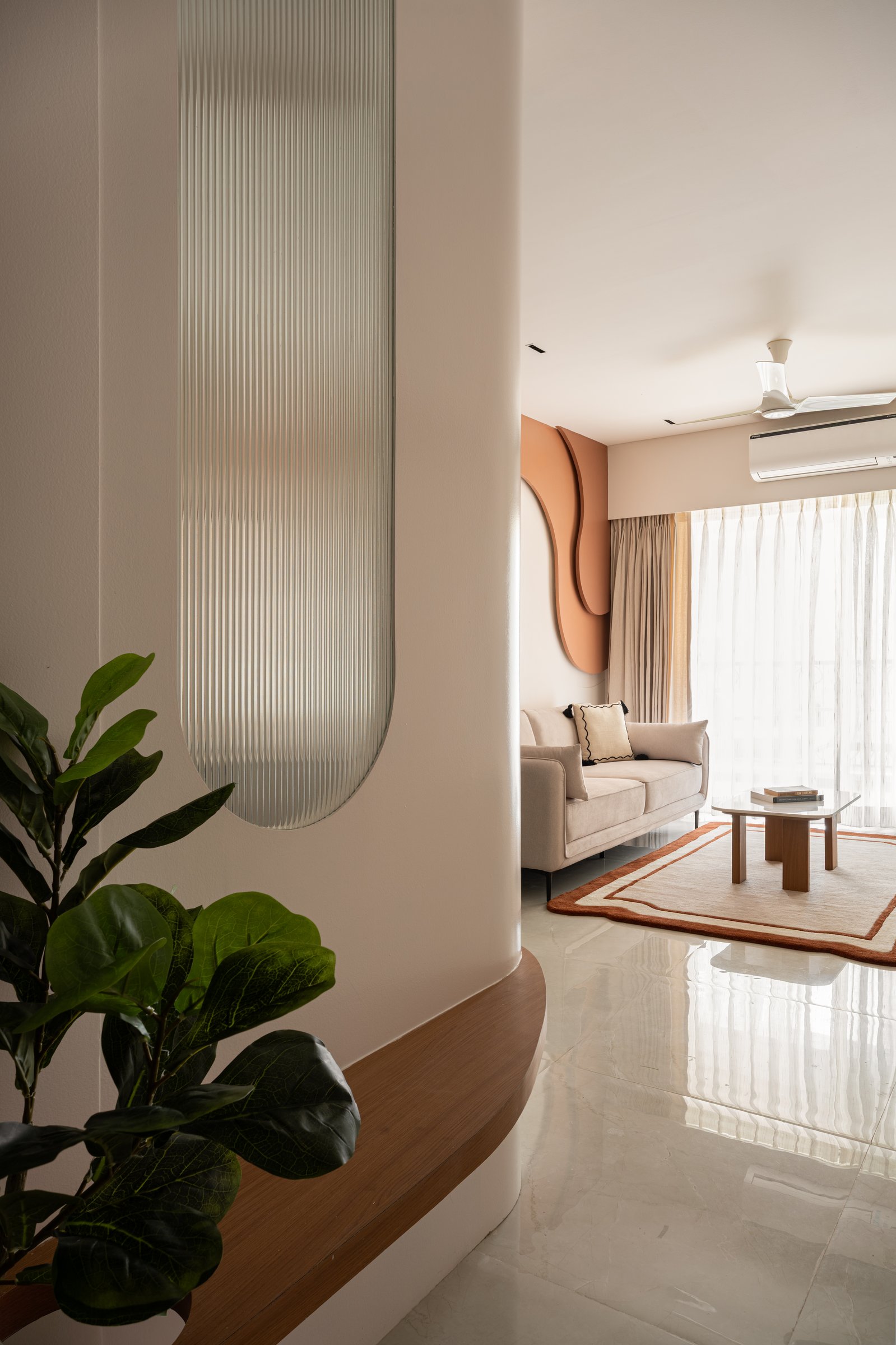
Stepping past the partition, the living room unfolds through its most emphatic gesture: an accent wall feature in the upper portion in terracotta against a cream backdrop, its forms flowing in organic, wave-like layers that rise behind the sofa. This is not wallpaper or paint alone but shaped panels with flowing, organic outlines that create a subtle relief against the wall differently through the day.
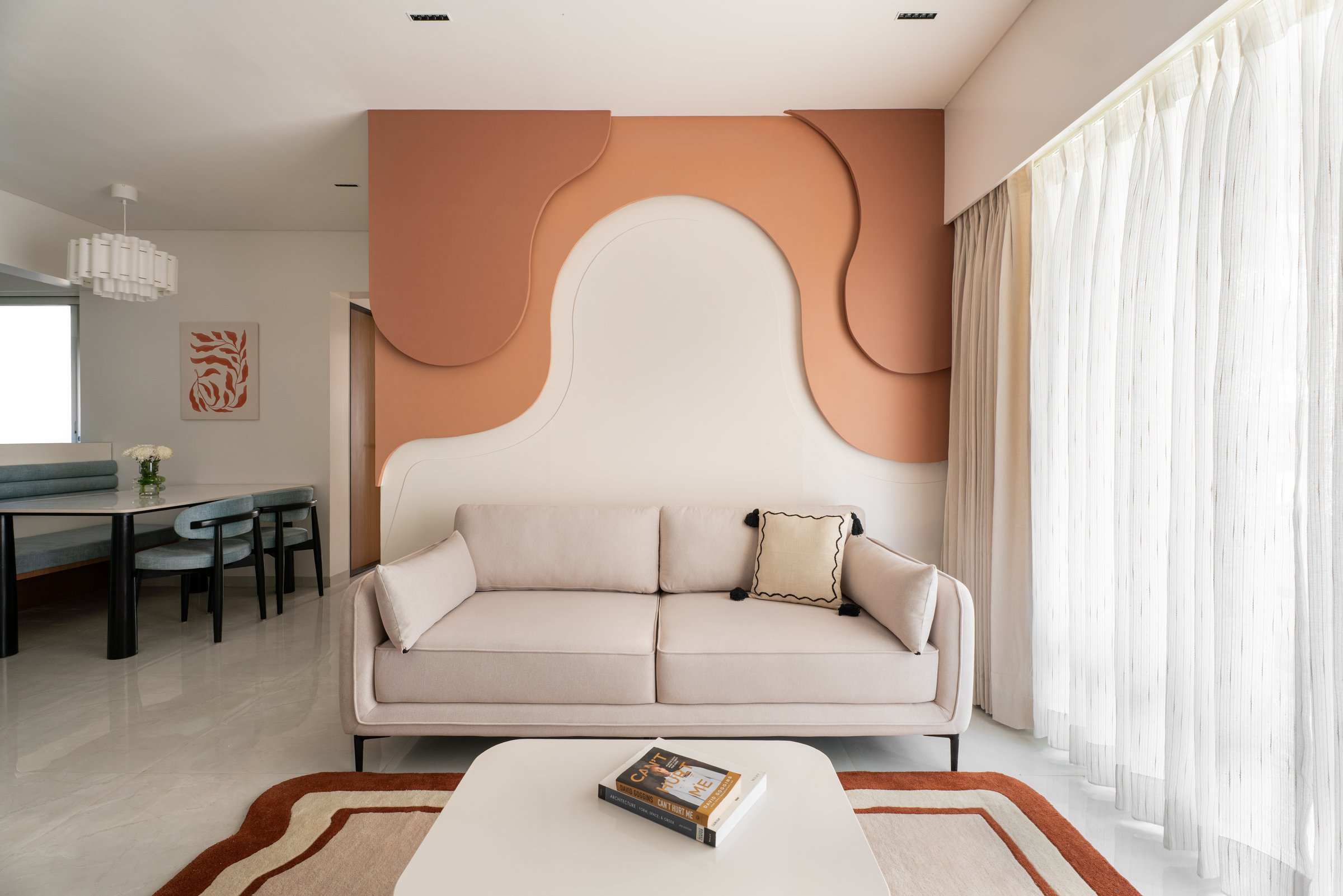
What prevents the wall from becoming mere spectacle is how the rest of the room defers to it. The sofa is deliberately neutral, the rug picks up the terracotta in a restrained border, and the flooring reflects rather than competes. The room asks for one act of visual bravery, and everything else supports it.
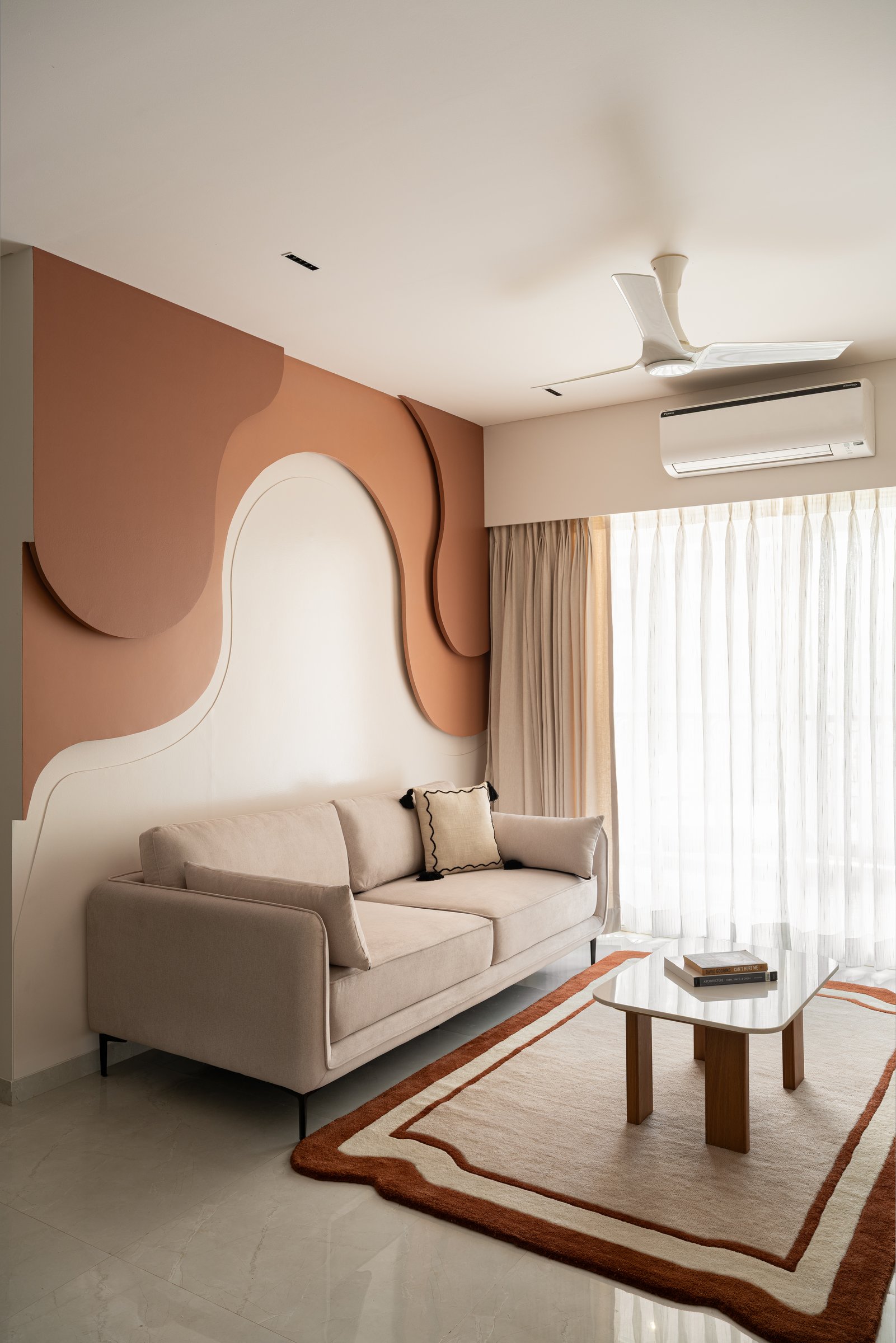
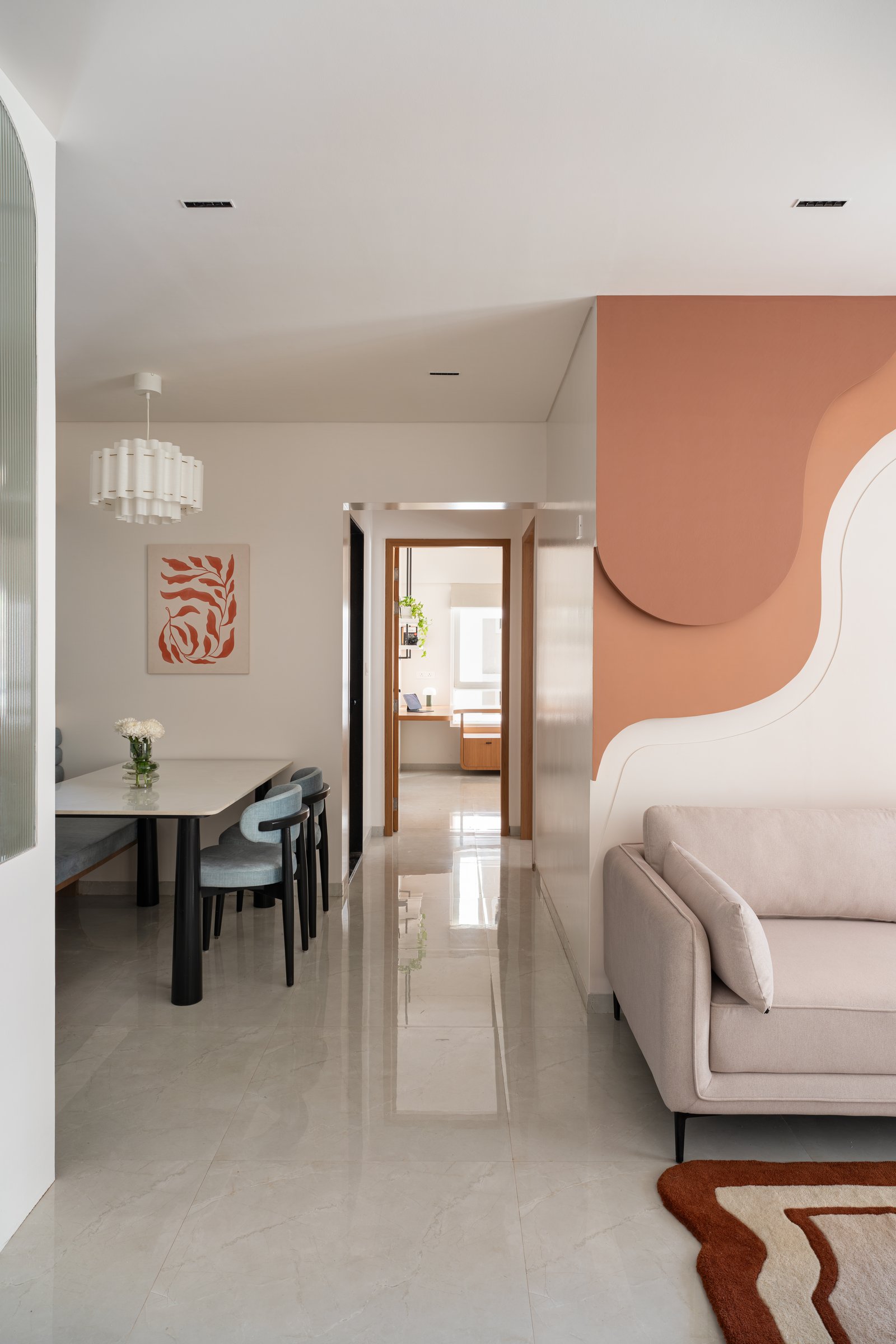
The sculptural accent wall wraps around toward the dining zone, its warm tones giving way to the clean white walls of the dining area. The transition from peach-toned living room to neutral-toned dining nook is managed not with a wall or a threshold, but simply through colour and material temperature.
In the dining area, a built-in banquette in soft blue upholstery is tucked against the kitchen partition, its timber base echoing the curved joinery language of the foyer. Two chairs in matching fabric complete the setup, and a tiered sculptural pendant overhead gives the nook its own atmosphere, distinct from the living room just metres away.
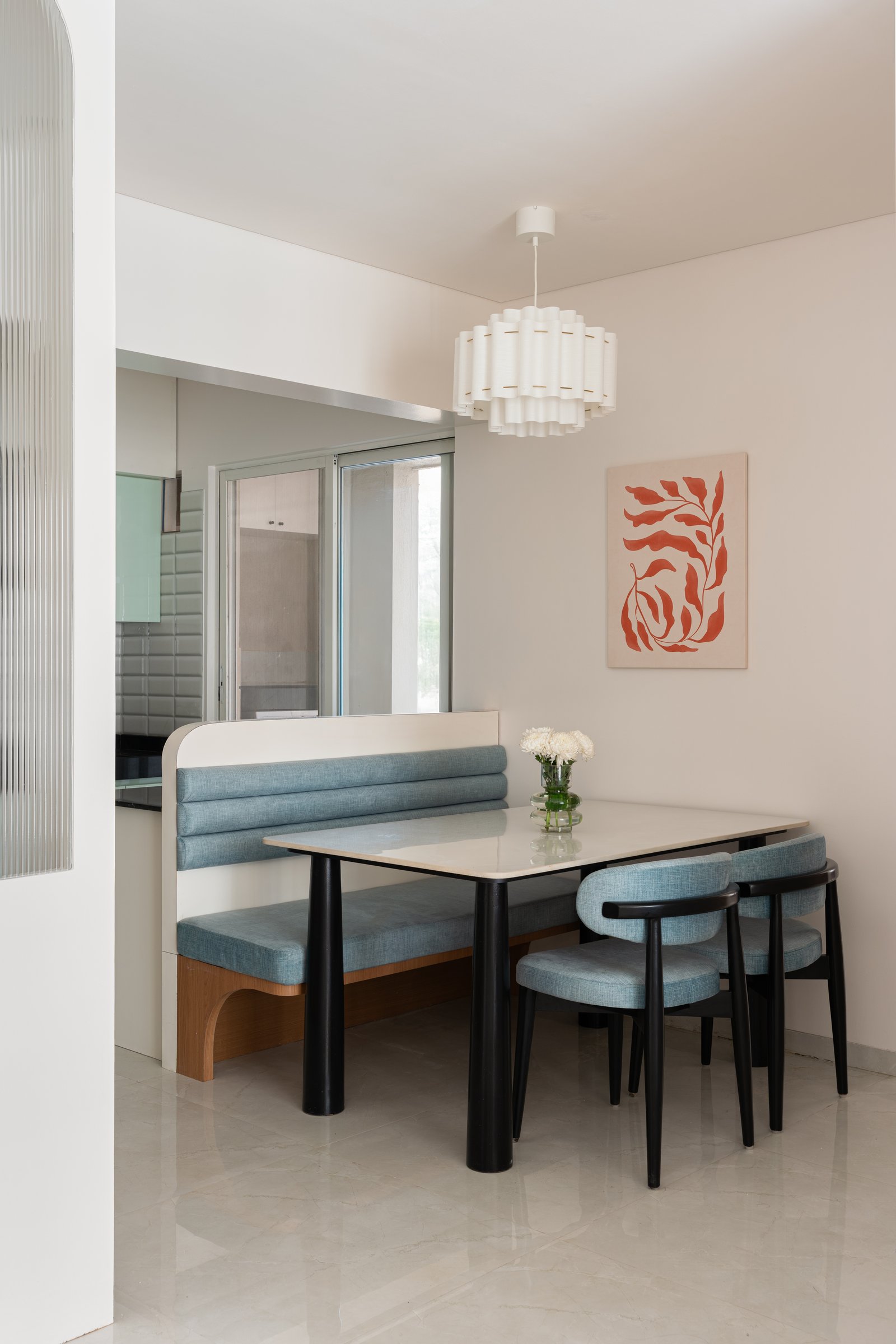
Seen from the dining zone, the kitchen reveals itself through a half-wall opening. Mint-green cabinetry and grey subway tile bring a cooler, more utilitarian register that nonetheless feels connected to the main living space. The fluted glass partition reappears here, viewed from behind, reinforcing the material continuity that holds the home together.
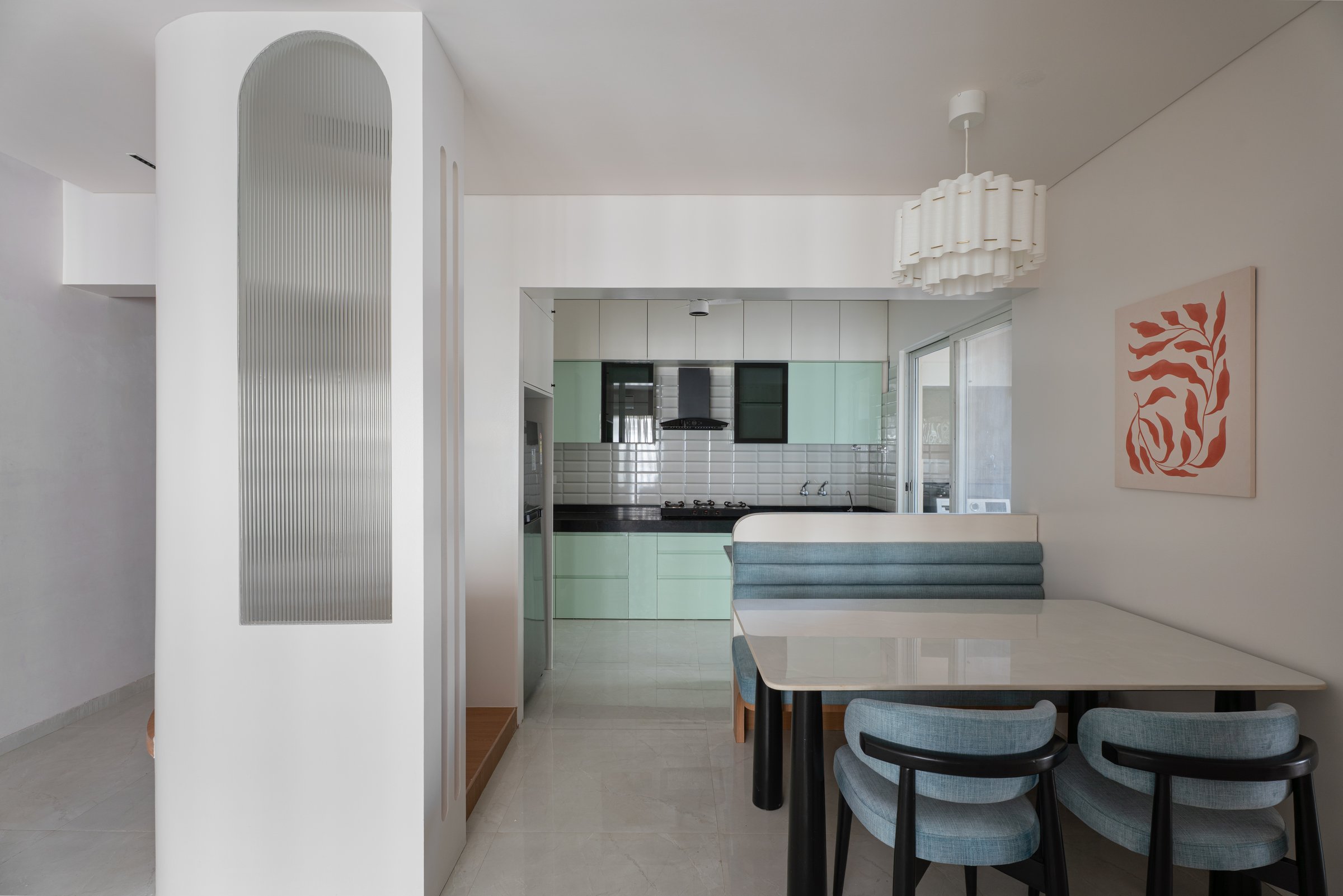
The kitchen beyond the fluted-glass partition reveals a parallel counter layout that maximises the narrow footprint. The mint-toned and white cabinetry keeps the space bright, while an arched fluted-glass partition separating the dining area from the kitchen passage carries the living room’s material vocabulary into the most functional room of the house.
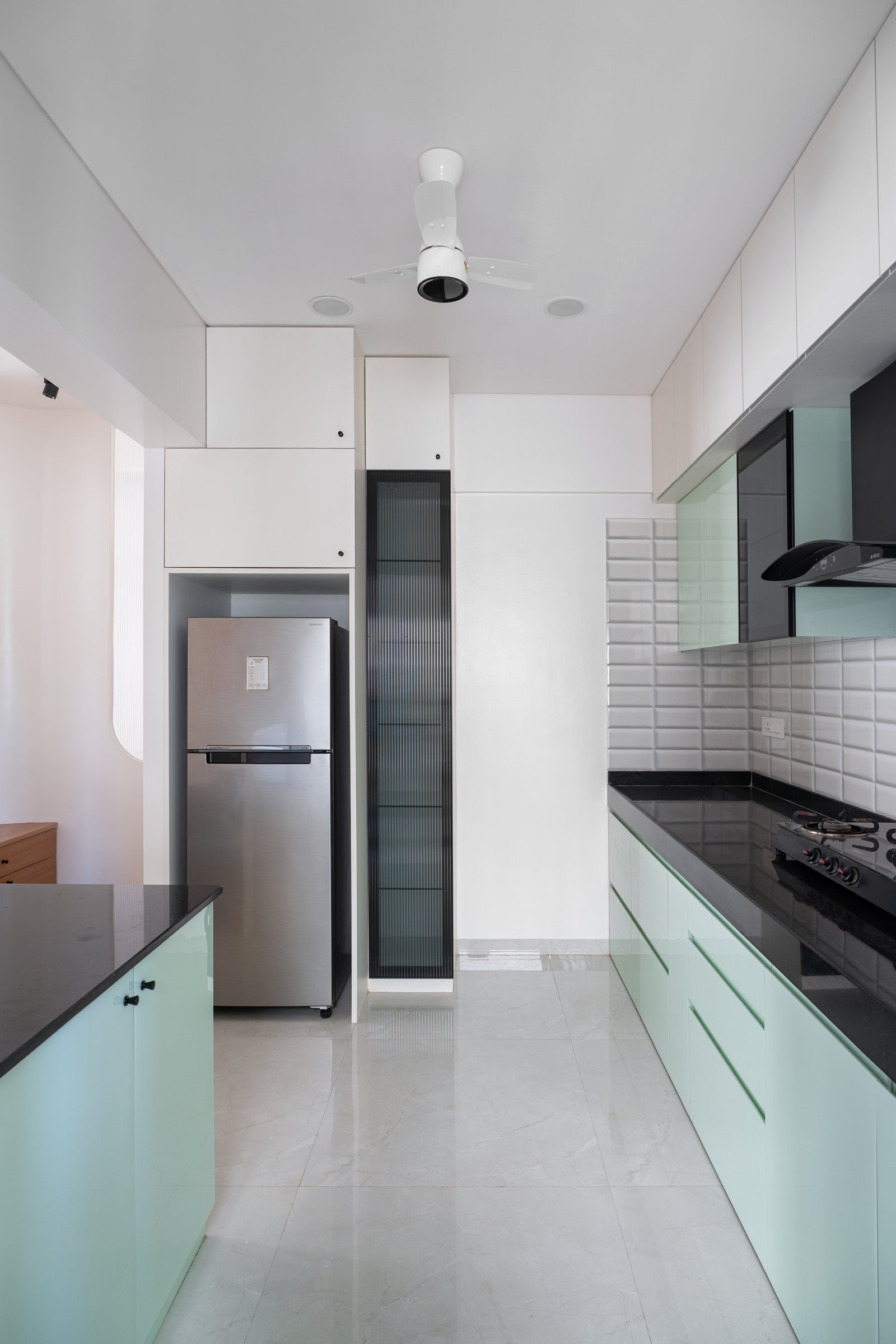
The kitchen introduces an entirely different emotional pitch. Mint-green lower cabinets line both sides beneath dark countertops, grounding the room in a colour that is quiet yet definitive. White upper cabinetry keeps the space feeling open, and a tall fluted-glass display unit anchors the far wall beside a stainless-steel refrigerator. White subway tiles form a textured backsplash behind the hob and chimney hood, providing warm, focused detail.
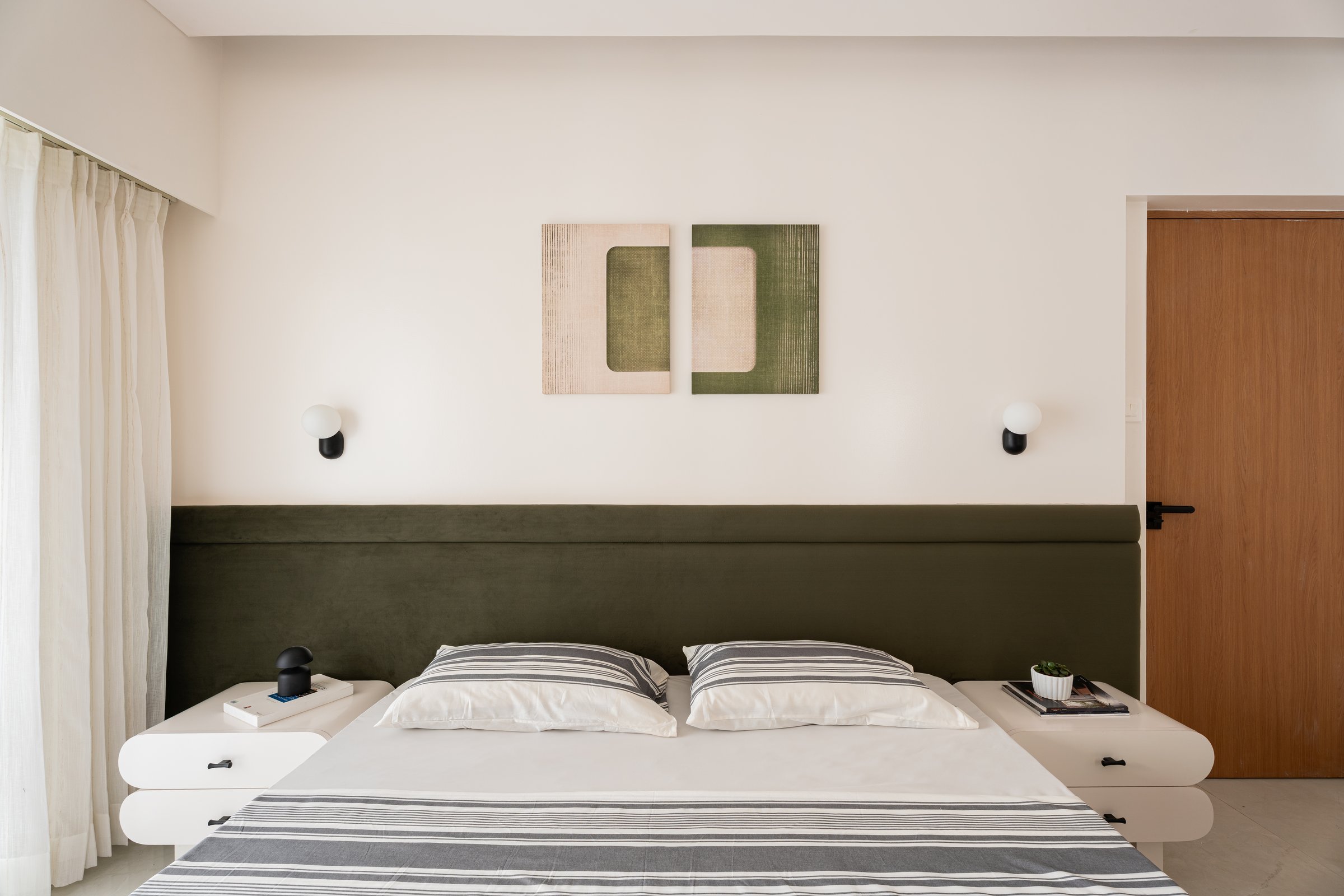
Black wall sconces flanking the bed and dark drawer pulls on the white nightstands provide sharp accents in the master bedroom that otherwise balances soft forms and muted tones with geometric details and striped bedding. The effect is deeply settled, a room calibrated for rest rather than display.
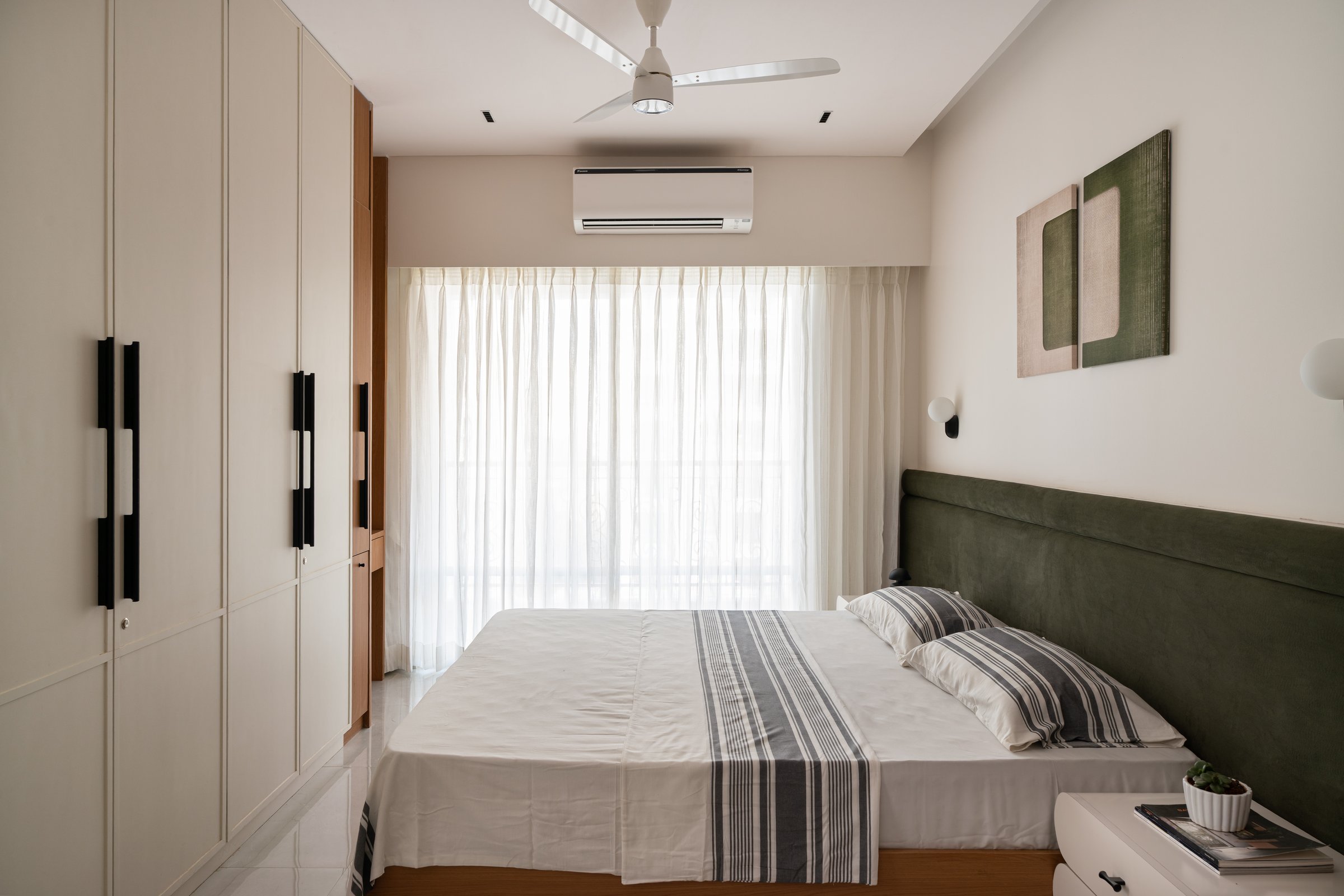
The bedroom demonstrates the studio’s skill with custom millwork. Panelled wardrobes with bold black handles line one wall, their clean profiles framing the composition, while a green upholstered headboard anchors the bed dressed in crisp striped linens. White sheer curtains diffuse soft light from the window alongside, and a green abstract artwork above the bed completes the vignette.
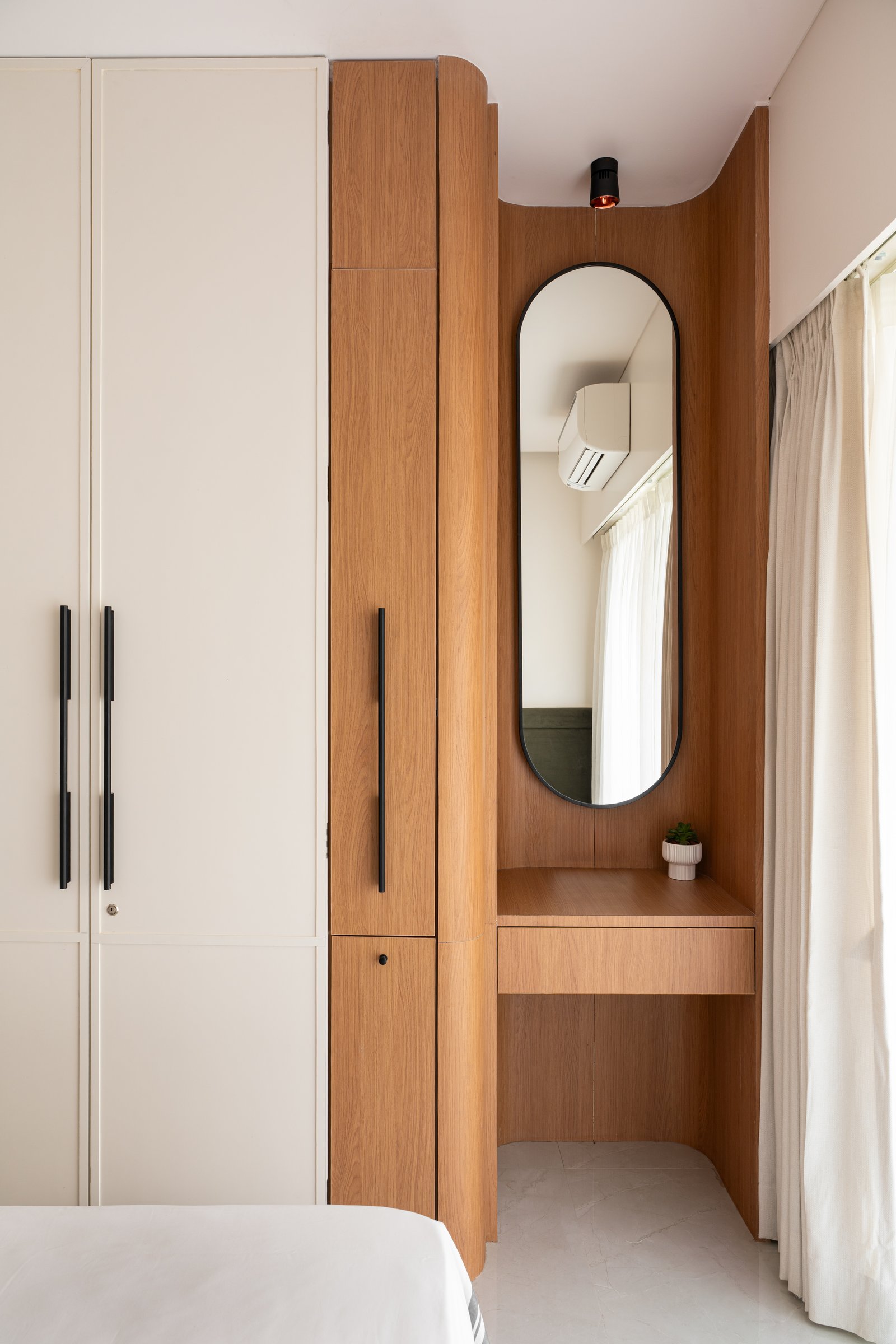
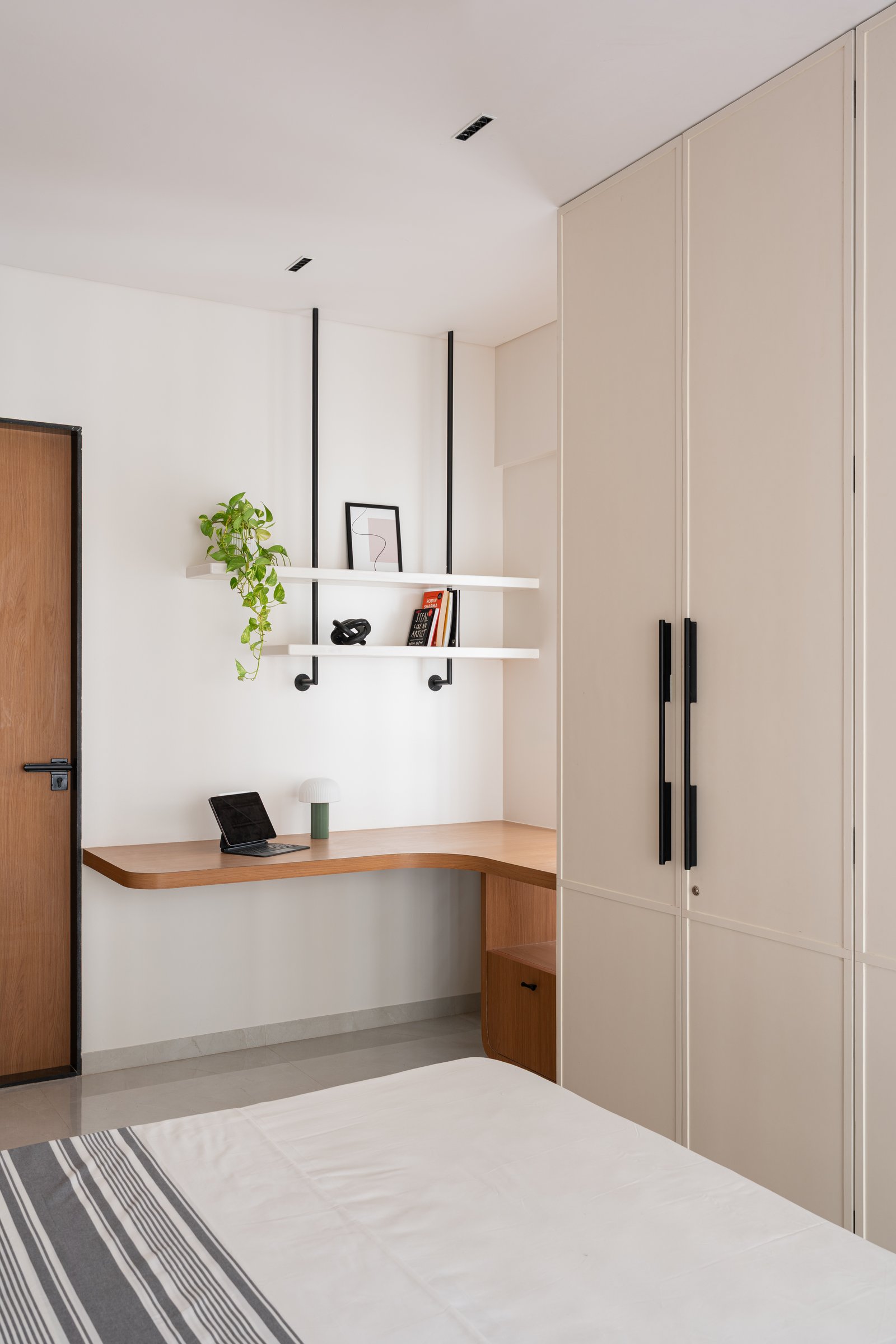
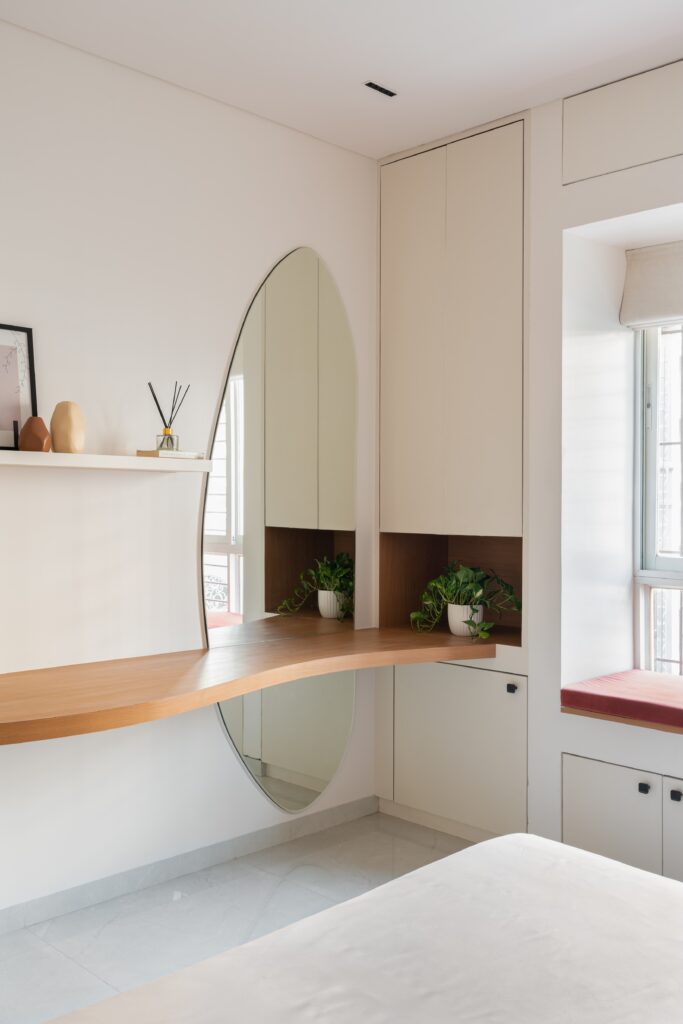
The wardrobe wall, seen in detail, reveals how the studio integrates a dressing nook into the bedroom’s storage system. A curving timber counter extends into the corner, where a dark timber-lined niche sits between the wardrobe doors, while the cream-finished wardrobe doors maintain the room’s overall calm. It is the kind of resolution that compact homes require and rarely receive.
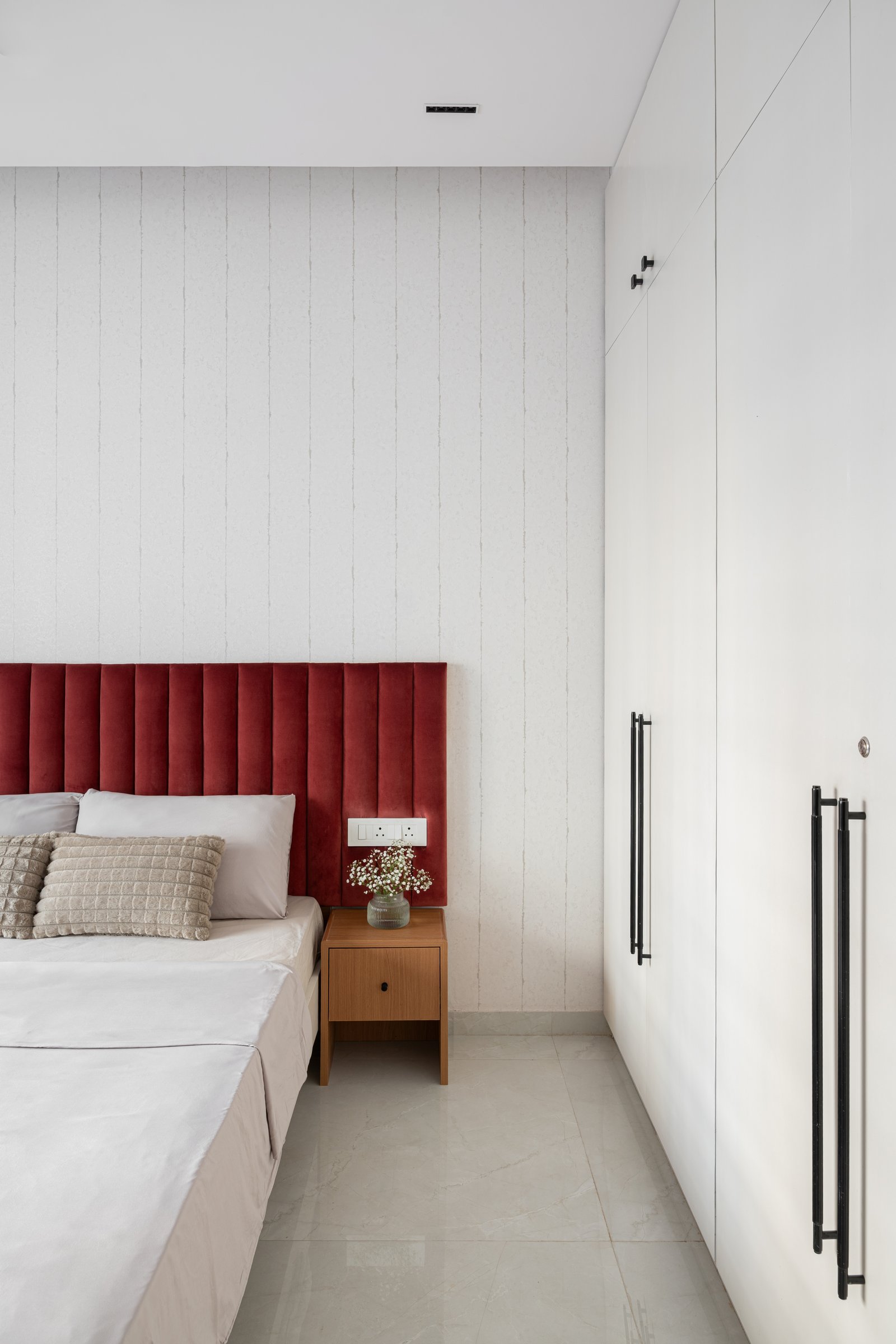
In the second bedroom, a deep maroon velvet headboard with channel tufting anchors the bed against pale textured wallpaper with subtle vertical lines. A wooden bedside table beside it holds a small vase of flowers, while the floor-to-ceiling white wardrobe alongside continues in its clean, panelled finish with black metal handles. The room functions as a restful retreat without any single element compromising the other.
What Zen represents for Pune’s growing design conversation is a refusal to accept that compact apartments must default to neutrality or blandness. The Archville Studio has instead built an argument for sculptural expression within tight plans, proving that considered curves and a confident colour strategy can make a small home feel intentional rather than constrained.
The project holds together because it commits to a single formal idea, the curve, and carries it from the first partition wall in the foyer through to the bedroom vanity. That consistency gives the home a sense of authorship that is rare in apartments of this scale, and suggests a studio whose ambitions are comfortably ahead of its typology.
Fact File
Project Name: Zen
Design Studio: The Archville Studio
Principal Designer: Ar. Priti K Dhumal
Location: Pune, Maharashtra